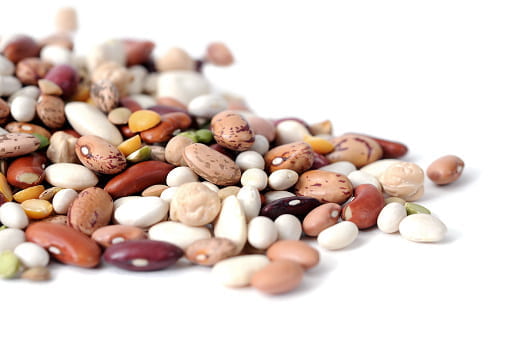
There are many types of beans, and each one has its own distinctive appearance and flavor. Beans are full of health benefits and are versatile to use in your cooking. With so many varieties, there is bound to be one to your liking! Experiment with kidney, navy, lentils, pinto, lima, black, cannellini, soy, or garbanzo beans to find your favorite!
Benefits of Beans. Beans are low in fat and a great source of protein, vitamins,minerals, and fiber! Beans contain both soluble and insoluble fiber – 6 to 10 grams in half a cup. Complex carbohydrates and fiber help you stay full longer because they take longer to digest. This, in turn, helps to better control blood sugar levels. Fiber is not digested by the human body, but promotes a healthy digestive tract by moving everything along, helping reduce constipation.
Beans and Heart Disease. Substitute beans for meat to help lower your risk of heart disease. Cholesterol and saturated fat (both found in meat products) can raise your risk for heart disease and stroke. Beans contain soluble fiber which binds to cholesterol and disposes of it. A recent study showed that eating 1/2 a cup of pinto beans daily can reduce the cholesterol in your blood by 8%!
How to Prepare Beans. Both canned and dry beans have a long shelf life and are great to have in the pantry. A bag of dry beans will have a greater yield and cost less than canned beans, but requires extra time to cook. Soaking beans will reduce cooking time. Soak beans for 4-8 hours in cold water and then cook beans until they are tender. Cooking time varies depending on the bean variety and how old they are. DO NOT add acids, such as tomatoes and molasses, to the beans before they are tender, or they will stay tough. Use canned beans if you are in a hurry. Hint: If using canned beans, rinse well to lower the sodium content. Beans are rather bland in flavor and benefit from added flavors such as curry, garlic, herbs, cumin, or chili powder.
Don’t know what to do with beans? Add them to soup or top your salad. Replace meat in a casserole with beans or tofu (a soybean product). Serve them as a side dish. Make 3-bean salad. Black bean, broccoli, and cheese burrito, anyone? Snack on hummus (a chickpea spread) with carrot sticks or celery. Challenge yourself to eat 1 1/2 cup to 2 cups of beans a week; they are good for both your body and your wallet!
Make Chili Bean Dip. Drain a large can of cooked kidney beans. Add 1 tablespoon vinegar, 3/4 teaspoon chili powder, 1/4 teaspoon ground cumin, 1 teaspoon dried onion, and a little bean liquid if needed; mash or blend until smooth. Serve with vegetable dippers or crackers.
Would you like to learn more about healthy food choices, food safety, and stretching your food dollars? Eat Smart New York (ESNY) can help, if you are a food stamp recipient or applicant,
For more information on the benefits of beans and healthy eating tips go to: www.eatright.org, www.americanheart.org, www.mypyramid.gov.
Linda Altenburger, Senior Nutritionist, SNAP-Ed