Cornell University Library Conservation

Cornell University Library Conservation celebrated Preservation Week 2013 by posting a preservation tip on our Facebook page each day.

Here is a summary of the week’s tips.

Tip #1: Do not store your books and documents in the basement.  Sustained humidity above 70% will promote mold growth. For more information on assessing the temperature and humidity of your library environment check out the dew point calculator at the Image Permanence Institute web site.

Moisture caused mold to grow on these pages.

Tip #2: Archival enclosures will preserve your family collections for generations to come. Check  preservation supply companies  for safe paper and plastic enclosures for documents and photographs. The Northeast Document Conservation Center has compiled useful information in their Storage Methods and Handling Practices preservation leaflet.

Archival folders and boxes protect photos and documents.

Preservation Week tip #3: Protect your library materials from light. Exposure to light can cause cloth and leather to discolor, photographs to fade, and varnishes to yellow. The Library of Congress has information about the lighting of library materials.

Fading caused by light exposure.

Preservation Week Tip #4: Do not use office supplies with your family treasures. Pressure sensitive tape and paper clips will stain and damage paper and photographs. Post-it notes leave a sticky residue.

Office supplies can damage family documents.

Preservation Week Tip #5: Keep food and drink away from library materials and family treasures. Food residues attract insects, mold and other predators. Food and drink stains are permanent.

Coffee and a marker have disfigured this photo.

by Michele Brown

Kelly and Lucy have completed their internship in conservation and will spend another week visiting Cornell libraries and Ithaca sights.

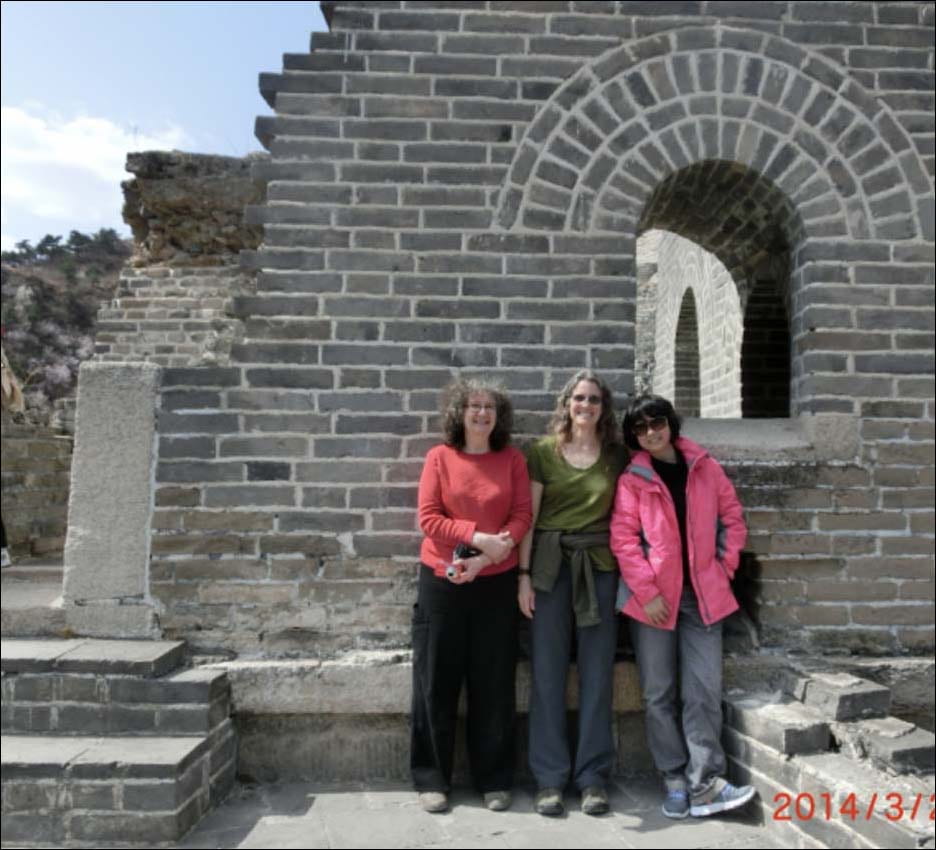
The internship program provides both hands-on experience and lectures in preservation theory and techniques. These can be complicated concepts to convey and we have relied on native Chinese speakers in the Cornell community to help us communicate. Four students and a library collection assistant have served as translators for our visiting interns.

Yun Peng (Penny) will receive her M. Eng. in Electrical Engineering from Cornell in May. Before coming to Cornell, she received her B.S. in Electrical Engineering from Purdue University.

After graduation she will be employed as a Researcher in the Electric Power Research Institute in Beijing. Penny was at first attracted to being a translator for our intern program because she saw it as an opportunity to meet professionals from some of the top universities in China. While translating for the first 2 interns she also discovered that book conservation is very interesting. For her, translating is a good way to use her knowledge of English. “Helping the interns to communicate gives me a sense of achievement.”

Xuejiao Yang (Snow) was born in Beijing and grew up in Malaysia.

She received a B.S. in Electrical Engineering from the University of Washington in Seattle, and in May she will receive an M. Eng. in Electrical Engineering from Cornell. In September she will begin a position for the International Engineering Company in Beijing. She has enjoyed translating because she enjoys learning about another subject outside of her area of expertise. Translation skills will also help in her future work which will involve negotiating with companies outside of China. Snow is also fluent in Malay, plays the violin and piano, and enjoys ballet.

Venna Wang is a sophomore biological sciences major with a concentration in microbiology in the College of Agriculture and Life Sciences (CALS).

She grew up in Queens, and she enjoys music and art She “plays the flag” in the Cornell marching band.  Venna enjoys translating because “it’s fun”, and she’s been happy to learn more about books, which she discovered are structurally a lot more complicated than she had realized.


Tianwang Liu is a freshman economics major in College of Arts and Sciences.

She is from Shandoung Province in China and enjoys singing, playing the piano, and playing the Guzheng. She watches movies to relax during study breaks. When we asked her what she enjoys most about translating she said, “As a student, working for the preservation department opens a new world for me, because instead of only reading books, I can know how books are made and repaired. It is amazing!”

Jing Carlson works as a collection assistant at the East Asian Collection (Wason) of the Kroch Library.

In the Cornell library system her main responsibilities include doing collection administrative management, assisting the curator to develop the collection, and coordinating with other units.

Jing is also an active participant in Cornell’s East Asia Program’s outreach activities.  As an educator for the East Asia Program she has taught members of the Ithaca community about calligraphy, Chinese art, cooking, and language.  Jing has also worked as a translator on campus and for the Ithaca City School District as well as the Racker Center.  Her current translating work builds on the experience she had while still living in China doing Chinese- Japanese translation.

Jing moved to the United States from Beijing in the 1990s. She loves art, cooking, hiking and has an interest in residential architecture and fengshui design. She has been living in Ithaca since 2000.  She enjoys family life here with her two sons and husband.

Jing has found time during her working hours to fill in when Penny, Snow, Venna and Tianwang have had scheduling conflicts.

We will miss Penny and Snow, but we look forward to working with Venna and Tianwang in the fall. We will rely on Jing as a resource for the next 2 interns from China who will arrive on May 13.


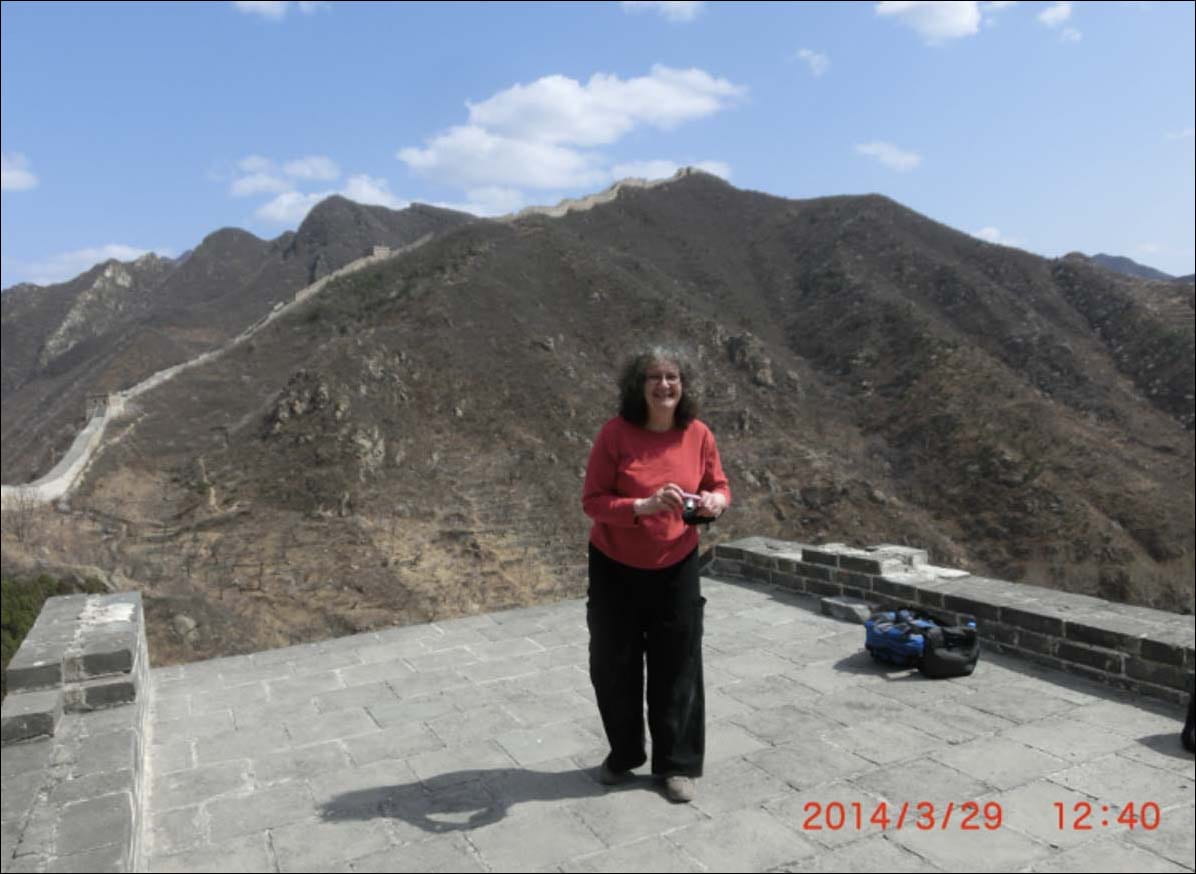
We would like to welcome two librarians from Renmin University of China as our new  preservation interns. Xiuzhong Xiong (Kelly) , Deputy Director of Systems and Manager of the Digitization Center, and Li Cao (Lucy)  from  the Department of Rare Books and Special Collections. Kelly and Lucy will be with us until April 26 learning book repair techniques and care and handling of library materials.

They began their training on March 26 by making blank books.  We are assisted by a wonderful of group of students who translate our instructions and explanations.

Kelly and Lucy sewed the sections of their books using a link stitch and then made quarter cloth covers with marbled paper sides. We used papers made by Iris Nevins.


Then, they learned how to do a “full” repair. Cornell divides repair of circulating books into 3 categories: full, half and partial.

Books with weak joints or detached boards receive a full repair.

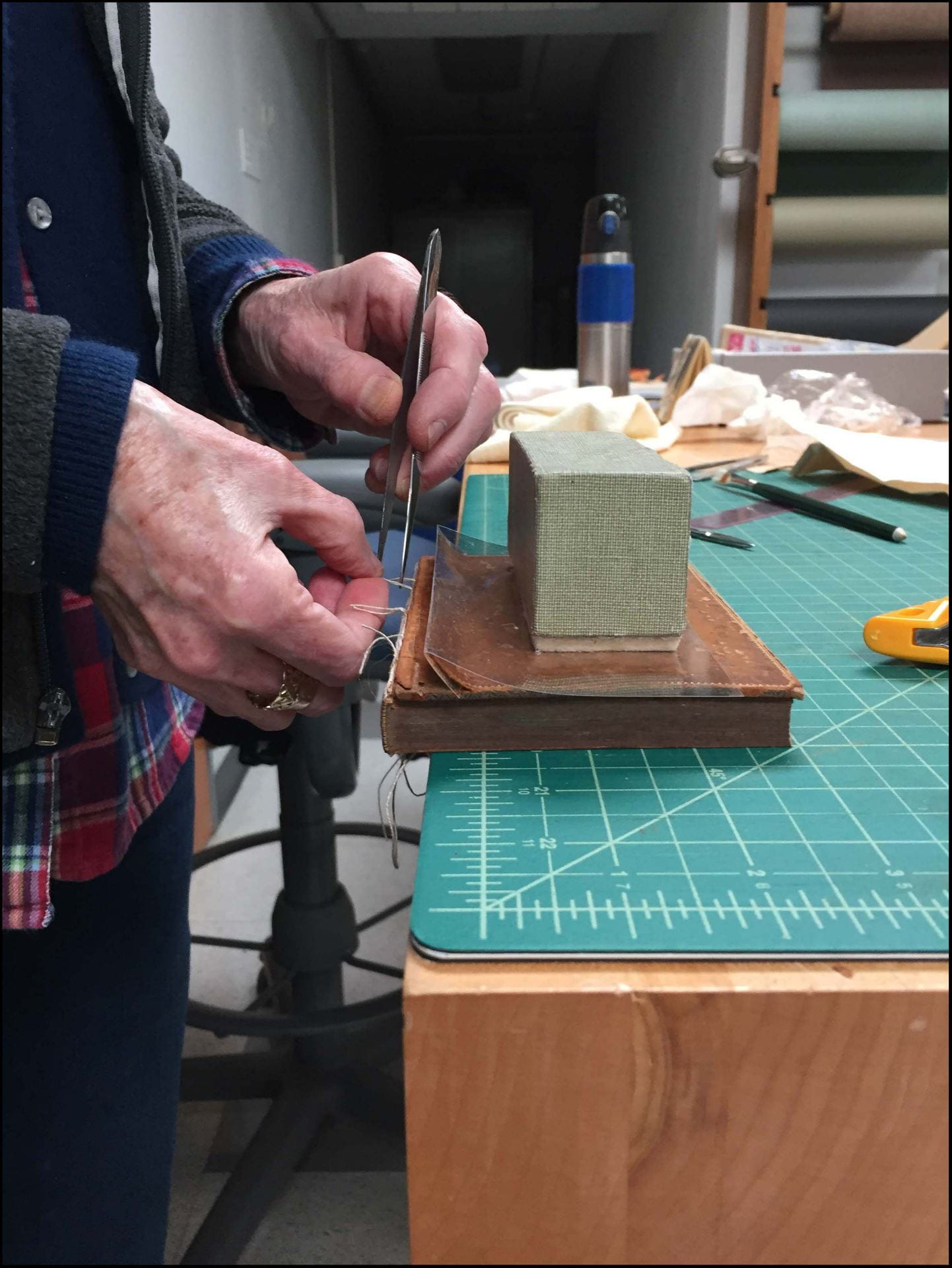
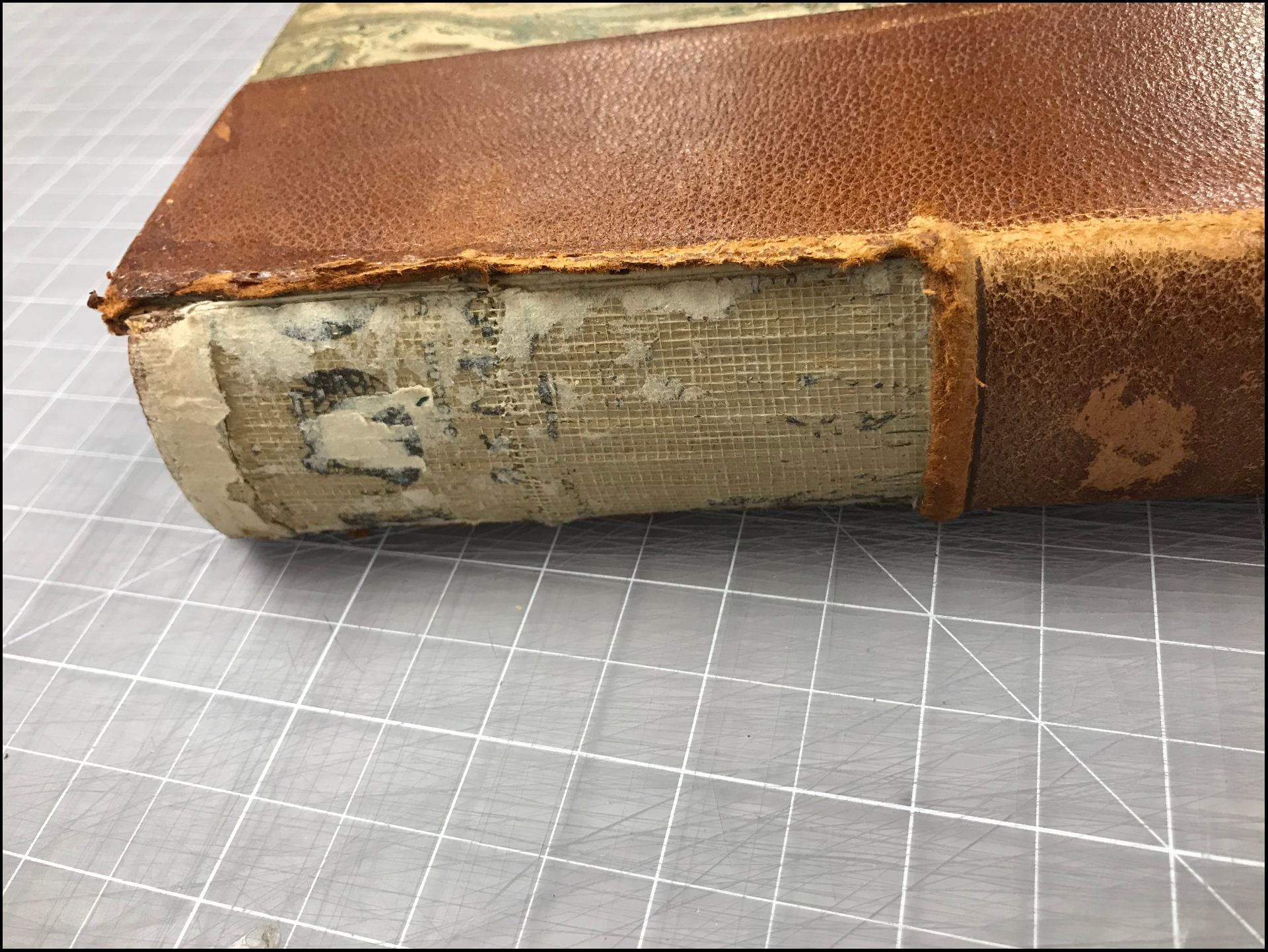
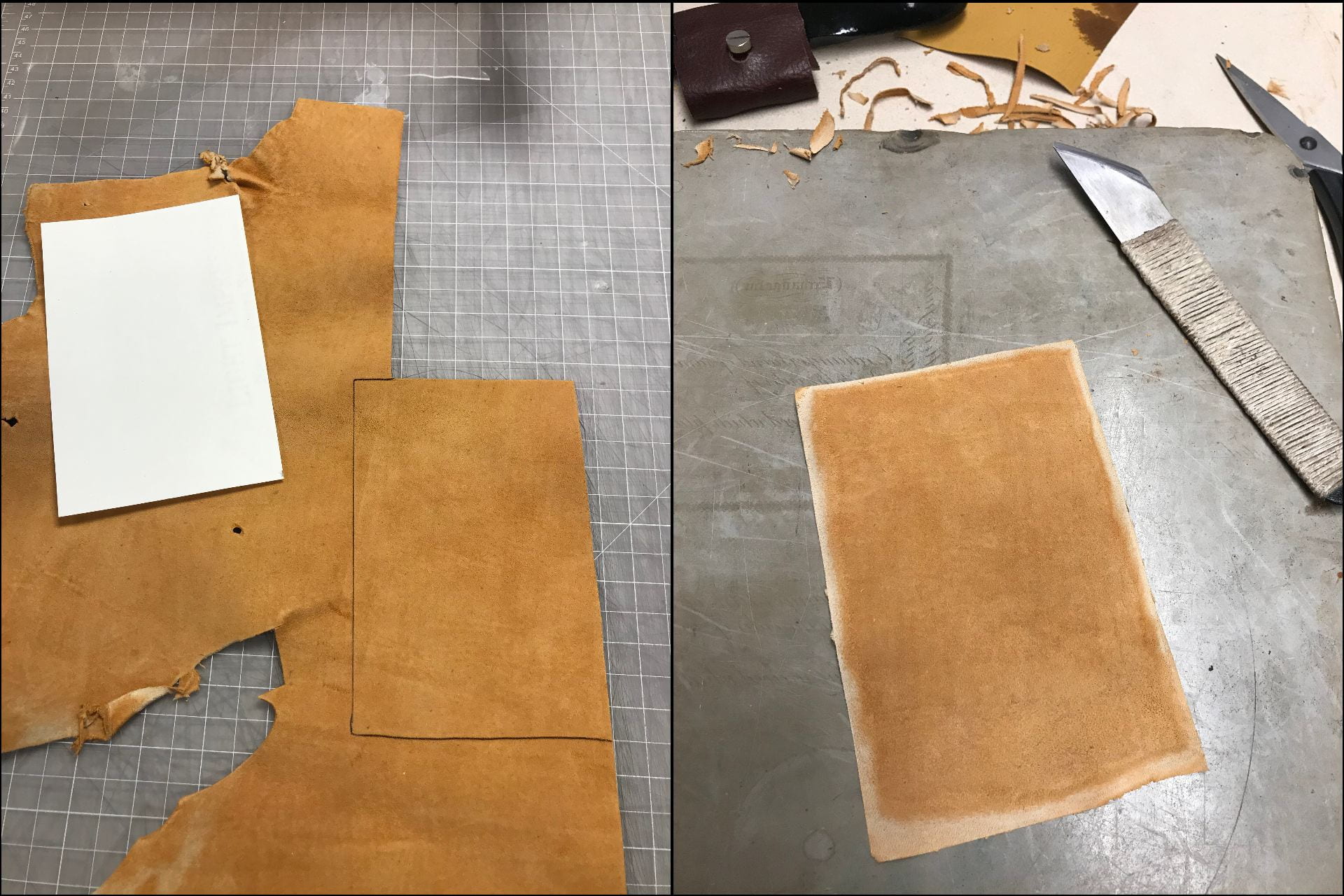
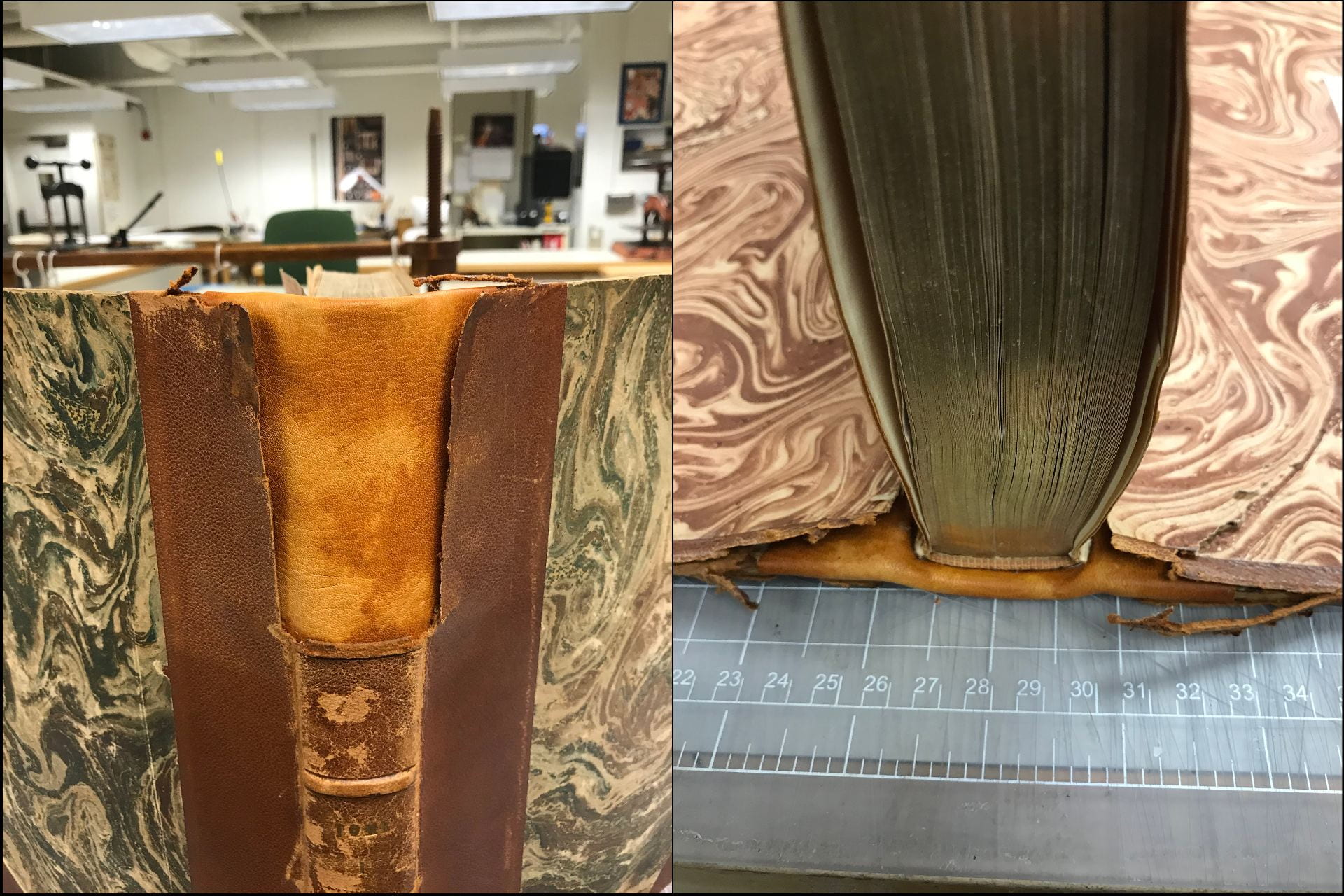
First, the spine is removed, the back is cleaned and new cloth strips are sewn to the text block. We drill holes for the thread using a jeweler’s drill.


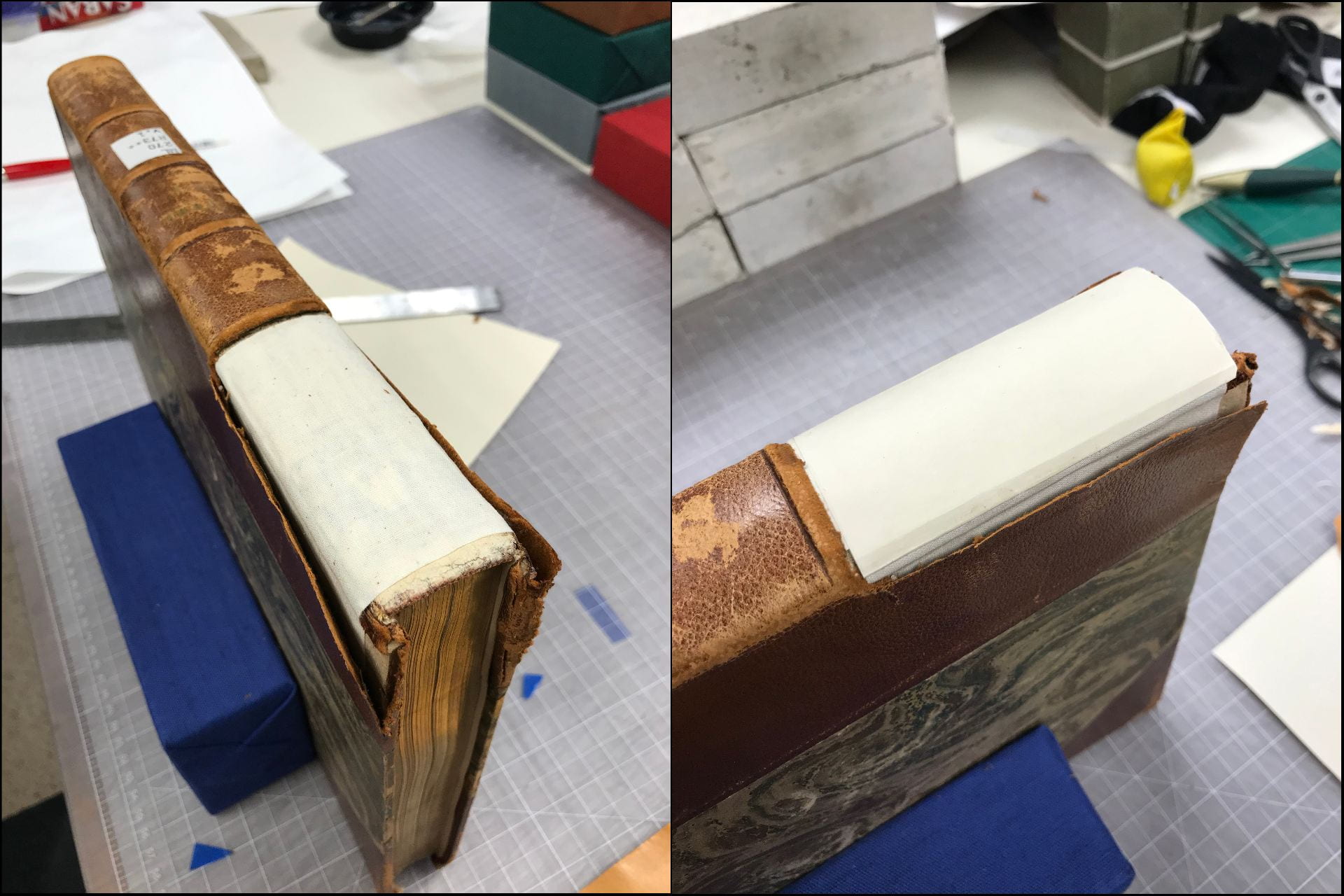
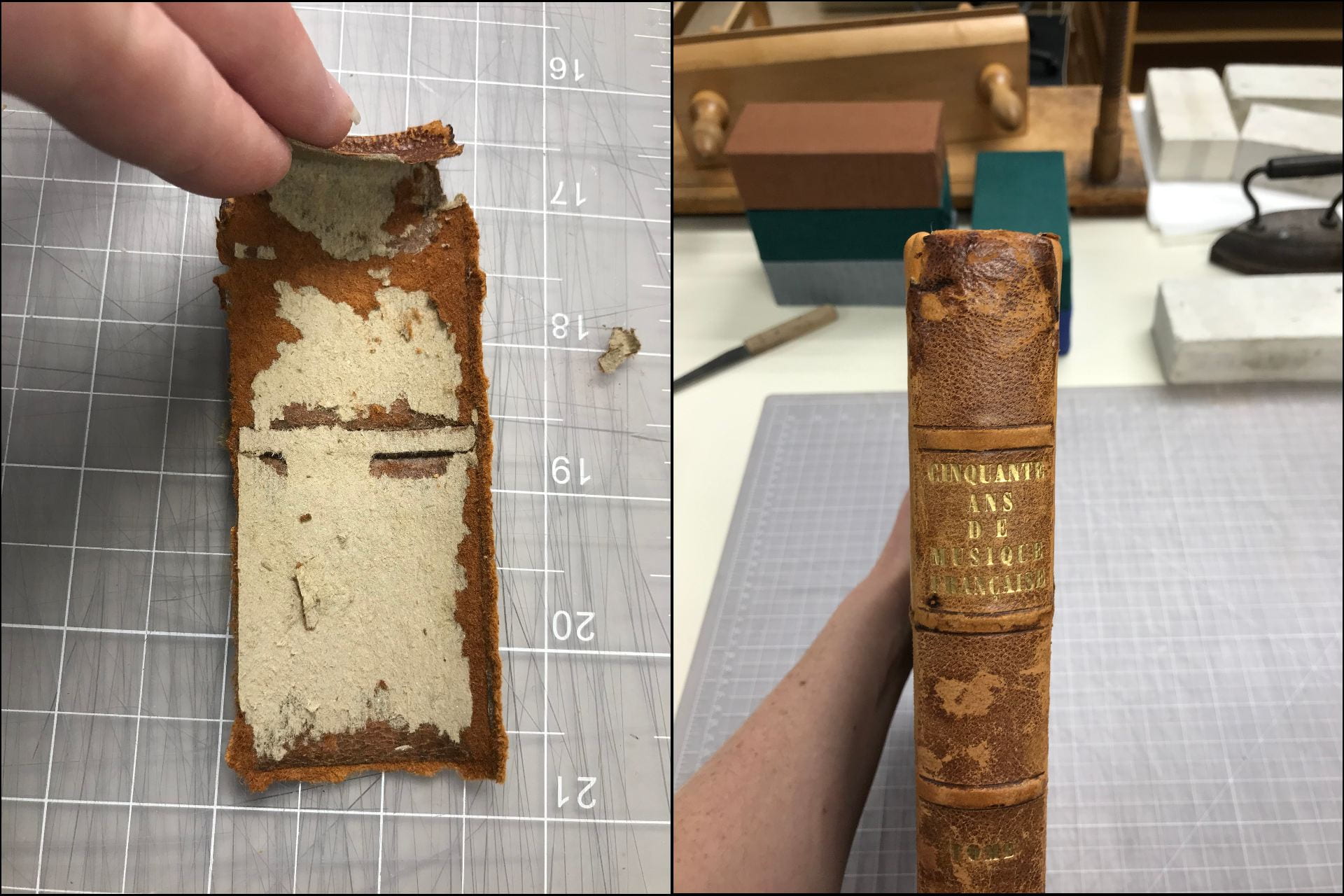
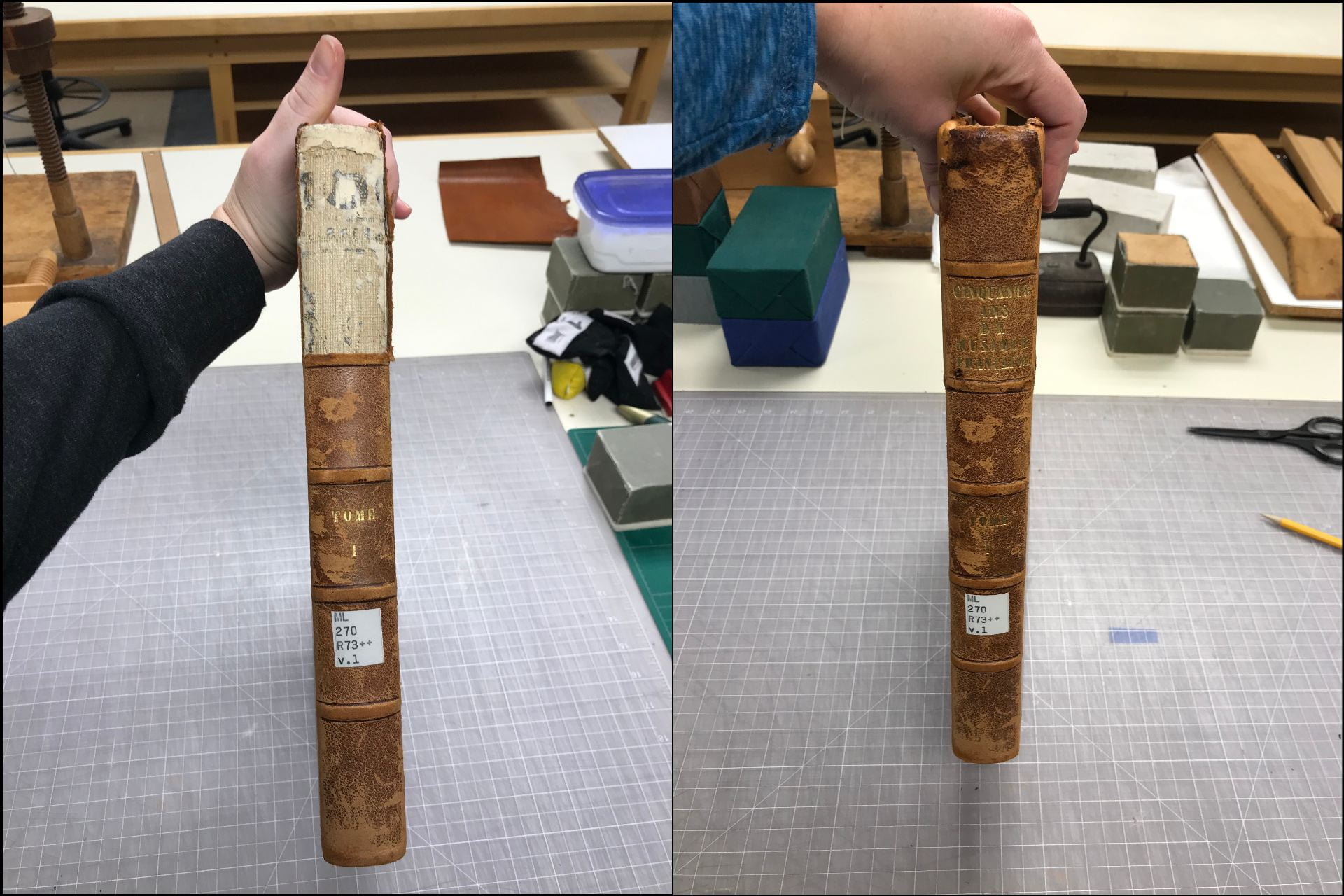
The back of the text block is lined with paper. A new buckram spine is attached to the boards and the cloth strips that were sewn in are glued to the case. Then, the original spine is glued back on or we make a paper label.


In the coming weeks they will be trained half and partial book repair techniques; and, they will be trained in disaster planning and recovery, mold prevention and remediation, and best practices for care and handling.


Welcome Lucy and Kelly.

by Michele Brown

We rely on students to help repair our circulating book collection and starting in the fall semester, we’ve been lucky to have Natasha Rao working with us. Natasha is a freshman in the College of Arts and Sciences. She is from Princeton, New Jersey, and is hoping to major in both English and Natural Resources.

Natasha also enjoys photography and hiking, and she is learning to fly planes. She told us she is tremendously enjoying her first year at Cornell, and loves working with book repair! We are happy to have her help.

While rare books receive specialized treatment that can take many hours, repair of circulating books emphasizes speed and efficiency. Our book repair person works at a dedicated bench with pre-cut materials close at hand.

Most books needing repair are identified by Access Services staff when the books are returned to the library. When the books arrive in the conservation lab they are first examined to see if they are candidates for the Rare Books collection. These are pulled out and placed on a truck for review by the curator of rare books and manuscripts. Brittle books are also pulled out and sent to the Brittle Books Coordinator.  If a book needs to be resewn, it is  sent to the Commercial Binding department.

Books that will undergo  book repair are sorted into types of repair (full, half and partial—more on book repair at Cornell at later time– and shelved accordingly). Loose flyleaves are reattached, back linings are cleaned off, and the original spine is tucked into the boards.

Here, Natasha removes the boards of a book she will repair.


Then, she cleans the spine.


Next, she sews cloth hinges into the inner joints. Then, she will apply new cloth and paper linings, and use a cloth strip to repair the case. The new cloth hinges are glued across the joints.


If the original spine is not salvageable she will print a new label using a lab computer.

We are very lucky to have such a talented freshman student, and we look forward to working with Natasha for several more years.

by Michele Brown

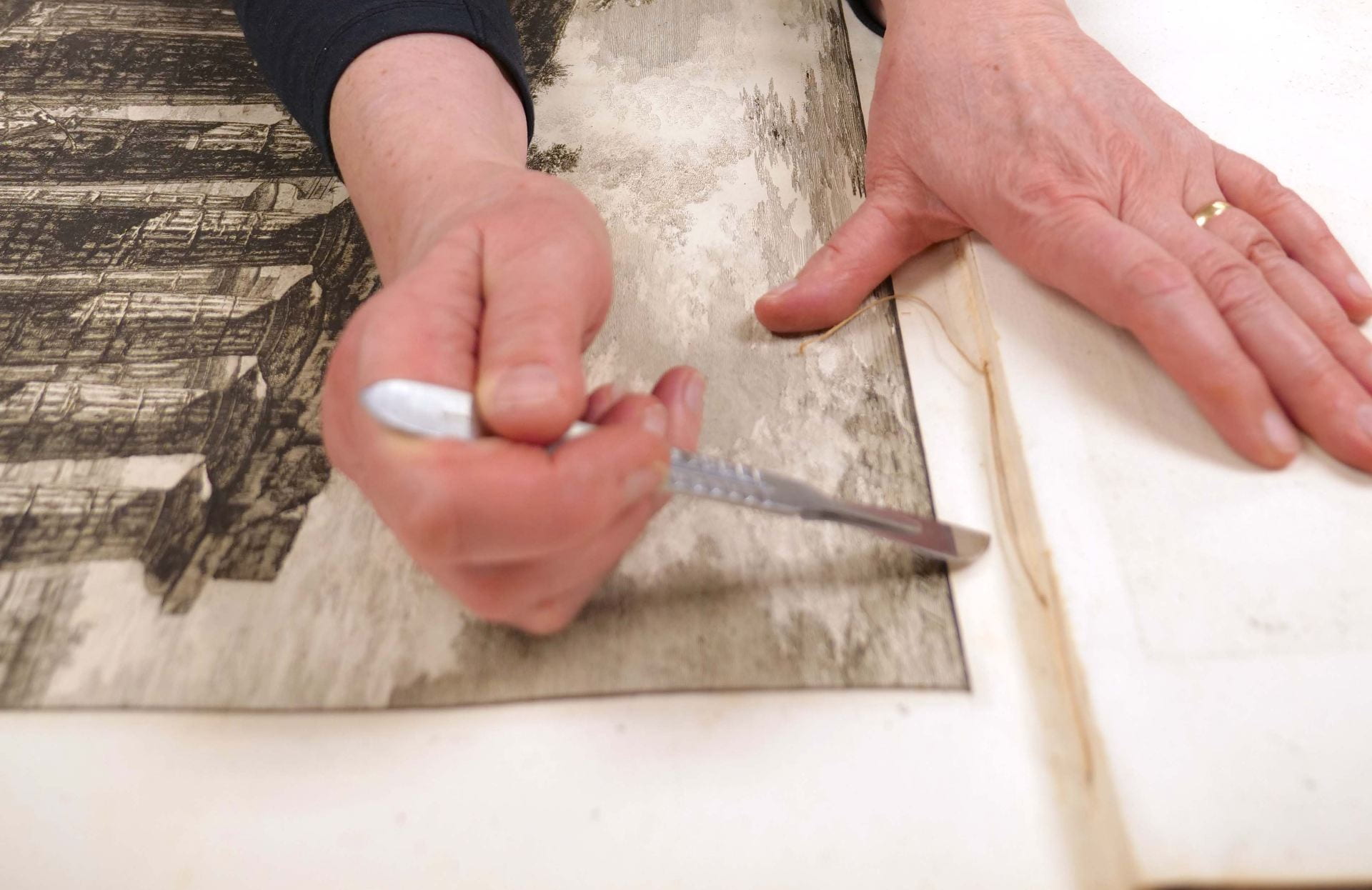
Preparing repair tissue to be used on historic laid paper is relatively straight-forward. Generally, you tear the  tissue after applying moisture using  a brush, water pen, ruling pen, damp cloth or other applicator with the goal  of getting nice long fibers that will blend into the surface of the paper.

Historic newspapers or other  papers with a smooth surface present a different problem. Rather than blending in, repair tissue with long fibers  may stand out. Cutting the repair strip with a scalpel is one solution, but the result is a very sharp edge that can still look jarring.

In preparation for an upcoming exhibit celebrating the Emancipation Proclamation, I  repaired several newspapers and documents with poor quality paper from the 1860’s. I experimented with various techniques for preparing the repair tissue: tearing along a wet line drawn with a water pen, tearing along a wet line and then trimming the “feathers” with scissors, using a sanding block, and cutting with a scalpel.


Deciding on which repair tissue to use can also call for some judgment. I like to use thin Usu Mino tissue from Hiromi to reinforce folds, edges and tears. It may look somewhat white—especially next to acidic papers–but often blends in surprisingly well.

Occasionally I use tan CK Color Kozo, also from Hiromi, for losses or for reinforcing weak edges on light-damaged papers. Yet while it is similar in tone to the newspapers, it  looked too dark when used for reinforcing fragile corners and folds. For these materials, Usu Mino was less noticeable.

For example, on the page below,  the corner on the left was reinforced using tan CK Color Kozo. Although the color of the tissue is close to the color of the paper, it looks too dark when pasted over the corner.


The bottom edge on the page below was  also reinforced with a torn strip of tan CK Color Kozo. It stands out more than I am comfortable with, and the long fibers give it a somewhat untidy appearance.


Here is the same page repaired with a strip of thin Usu Mino that’s been torn and then trimmed.


Here is another view of the page in the first photo. The tan CK Color Kozo has been removed and replaced with Usu Mino. In this case, I used a scalpel to cut the tissue for the corner repair. The tissue reinforcing the center fold was torn then trimmed.


The top edge of the newspaper below was  reinforced from the back with thin Usu Mino, but still looks fragile.


Tan CK Color Kozo was used to fill in losses, and while it doesn’t match exactly it gives the piece a more finished look and strengthens the top edge. In this instance the repair tissue was torn using a water pen.


The second two weeks of Deng Liang and Zhang Lijin’s time in the conservation department included an introduction to principles of proper storage and environment, care and handling of library materials, disaster planning, mold prevention and remediation, and exhibit preparation.


They practiced making exhibit supports.


And, they recovered wet materials from a “flood.”


After visiting the preservation department in Mann Library, touring other Cornell departments and  some sightseeing in New York City, Deng Liang and Zhang Lijin returned to China last week. We wish them well in their future preservation endeavors and look forward to 2 interns from Renmin University in March.

Michele Brown

By Michele Brown

The first 2 participants in our preservation training program for librarians from China, funded by the Henry Luce Foundation, arrived at the beginning of November.


Zhang Lijing is a librarian in the special collections department in the Peking University Library.


Deng Liang is a librarian in the History of Science Collection at Tsinghua University Library.
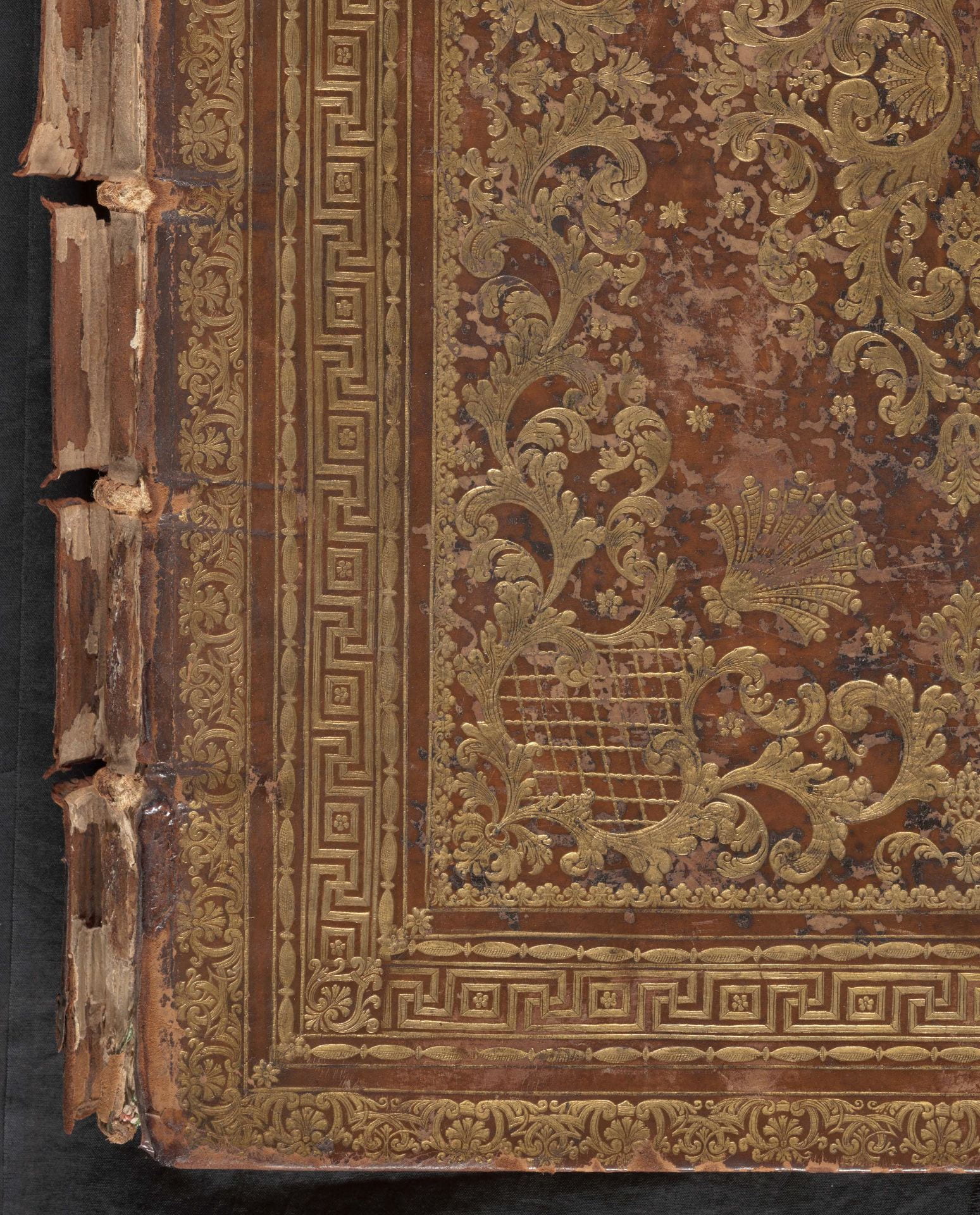
 

The first two weeks of their program has focused on the history of western bookbinding, binding case-bound books, and repair of circulating collections.


You can see more photos on our Facebook page.

Stay turned for Part 2: care and handling, exhibit preparation and disaster planning.

by Michele Brown

A new exhibit: “Wardrobes and Rabbit Holes: a Dark History of Children’s Literature”   just opened in the Hirshland Exhibition Gallery in the Kroch Library at Cornell University. Utilizing Cornell’s rich rare book and manuscript collections, the exhibit explores  many themes in children’s literature.

The Division of Rare and Manuscripts Collections installs at least two major exhibits each year, and Cornell Library Conservation works closely with them to make sure the materials are displayed safely and look their best. Each exhibit takes many hours and fine coordination between several departments.

First, curators select and evaluate the materials for the exhibit. Eisha Neely (left) and Freddie  Loew discuss potential candidates.


These are then examined by conservators from the conservation unit. Michele Hamill will evaluate and, if necessary treat, flat paper and photos, whereas Michele Brown will treat books and other items, including broken game boxes.


The exhibit coordinator, in this case Eisha, decides on the color theme for the exhibit. The supports for all of the materials are made from high quality board by Pat Fox, Assistant Book Conservator,  who also advises the coordinator on the amounts of board needed for the supports.


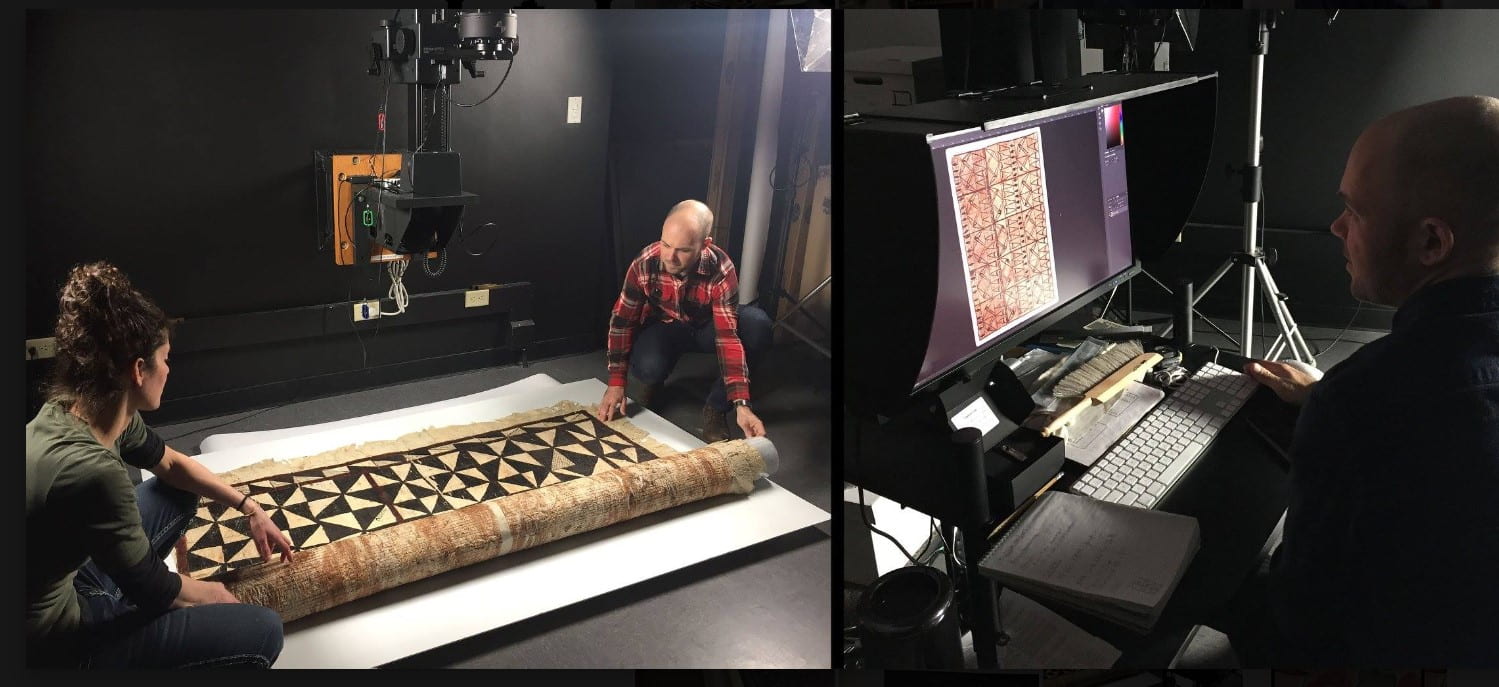
Rhea Garen , from the Digital Media Group, scans each item in the display.


The finished exhibit looks great! The materials are safe and supported. You can view the exhibit online.


Original condition of the book. Here the text block is separated from the boards

The treatment Caesalpini’s De Plantis Libri XVI, 1583, stemmed from concern about the presence of mold spores.  The book’s condition when it arrived was actually quite good. The sewing was still intact throughout the text block and it was still attached to the boards. Unfortunately, the fly leaves had separated from the text-block and were only just attached to the book’s cover.  Someone had repaired the inner hinge in the front and back of the book and it was this repair that was keeping the fly leaf attached. Finally, after it was determined that the “mold” was not actually mold but soot and bacteria colonies, treatment could begin.

First, I began with dry cleaning each page with an Absorene Dirt Eraser sponge, also known as a dry cleaning or soot sponge, which we purchased from Gaylord. This sponge is designed to attract any surface dirt that may be present, though not necessarily visible. As treatment progressed, I began to find that the sponge was not picking up much dirt. This seems to indicate that the pages are actually quite clean on the surface, and that the smudges of soot have become embedded in the paper over time.

Example of Worm Damage

The next step was to reattach the fly leaves to the text block. I used usumino,  which is a Japanese paper (from Hiromi)  and wheat starch paste (from Talas) to attach the fly leaf to the text block. In order to repair the inner hinge in the front and back of the book, I used a thicker Japanese tissue called sekishu (also from Hiromi). This will help protect the the board attachment.  As mentioned in the previous post, there was worm damage throughout the book. This was apparent on the fly leaves so I used a colored kozo Japanese tissue to repair any worm damage and to consolidate some areas where the damage was significant.

Reattached boards and repaired worm damage

Finally, we wanted to try to clean the vellum covers with something a little stronger than a dry cleaning sponge but not so invasive that it damaged the integrity of the materials. After consulting with Michele Brown, I used cheese cloth dampened with ethyl alcohol to gently rub across the cover. Both boards and spine were cleaned in this manner. Though the change was not visible on the surface of the book, the white cheese cloth did become gray with dirt.

Front cover after alcohol treatment.

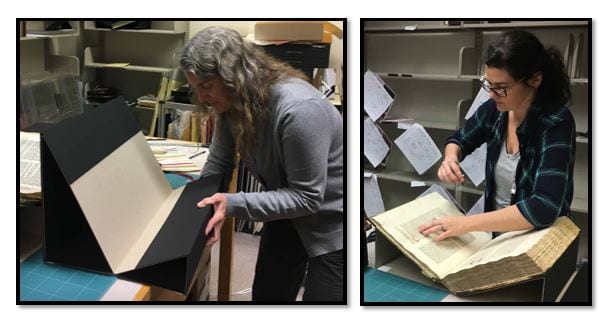
With the treatment of this book complete, I constructed a custom-fit clam-shell box with Velcro tabs for this item to live in for the foreseeable future.

New custom made clam-shell box

by Michele Brown

The History of Science collection recently acquired Caesalpini’s De Plantis Libri XVI, 1583, which according to the Encyclopedia Britannica is the first textbook on botany. Our copy is bound in full vellum and is in good condition except for dark smudges, brown stains (thought to be foxing), and worm damage throughout. It was sent to Conservation out of concern for the smudges and stains, which looked like inactive mold.

We consulted with Kathie Hodge, Associate Professor of Mycology in the Department of Plant Pathology & Plant-Microbe Biology, and author of the Mushroom Blog.


Professor Hodge took tape lifts of the black smudges and foxing, and examined them under a microscope. Surprisingly, there is very little mold in the book. The black smudges are apparently soot, and the brown stains are actually colonies of actinomycetes, a filamentous bacteria. The annotated slide below shows  that  mold spores are present, but in small quantities. It was actually difficult to find many mold spores on tape lifts that were taken throughout the book and on the binding.

The last  slide shows soot particles mixed with a few linen fibers from a tape lift of one of the black smudges.

Professor Hodge’s verdict is that despite its appearance there is very little mold or bacterial contamination of this book. She was curious, however, about the staining that has occurred around the worm holes.

We decided to proceed with dry cleaning and minor repairs. Stay tuned for Mary Schoenfelder’s report on this treatment.

keep looking »