a (real) shooting star

I actually didn’t realize shooting stars could actually…happen…..!….until I saw one at Fuertes.

I knew they were real, but I’m also from a city, so I’d sort of internalized that I would never get to see one myself. But with the Rose House, we walked all the way out to Fuertes Observatory, and I remember thinking that it was a very far walk. But I realized once we got there that it was darker out there, and that the stars were really, really visible.

Quite a few people were in line for the telescope at first, so my first move was to go up to the balcony. It was really dark, and the entire balcony was lined with red lights. A helpful Astronomy club member told me that red lights are actually better for star spotting! As were talking, and she was helping me identify specific stars and their designations (which differ per country, in some cases), there was a bright streak of light — a shooting star.

I really wasn’t sure what I’d seen, and I still wouldn’t be sure if it wasn’t for the gasps of everyone else on the balcony. I still feel really lucky to have seen that star; I hadn’t ever seen one before, and I’m not sure if I’ll be as lucky next time I make it over to Fuertes!
To Infinity and Beyond

It was super cool to learn that there was an observatory on campus. Being in Ithaca, the night sky is incredibly clear especially on the slope. That being said, going out to the Fuertes Observatory was a completely different experience. Luckily, the night we went out there, Saturn and its rings were able to be seen. Looking up and seeing a planet that is on average about 894.4 million miles from the Earth was mind-blowing. It made me really sit back and reflect on the sheer expanse of the universe and how perspective is everything. When you compare the size of the solar system with life on Earth every large problem seems to become so much smaller.

Bright stars and red lights

Since this was my first time going into the observatory, or any observatory for that matter, I thought it was really cool seeing the different parts of the telescope. For example, I didn’t know that these telescopes have a mechanism that turns the telescope with the spinning of the Earth, so that the view through the telescope moves with things in the sky to keep them in view longer. It was really nice that the astronomy student who hosted us was so enthusiastic about the observatory — I learned a lot and had a fun time because his excitement was infectious.

I also really liked the red lights on the deck, even though those lights definitely weren’t supposed to be a main attraction. I wish there were a switch in my room that would let me turn all my lights that color for a bit.

What is Actually Out There?

As a child, I was always fascinated with outer space. Especially after watching that youtube video that everyone probably has seen where it explains how many Earths can fit in the sun and how big the milky way is and how the milky way is only a small part of a quadrant, etc.. I don’t know if it is just me but knowing that the universe is ever-expanding and there are parts of the universe where it is so far away that its not possible to explore is mind-boggling to me.

Being able to stargaze at the Fuertes Observatory made me reflect on my childhood self of just looking up at the sky and being fascinated with that same idea. Even though the air pollution made it difficult to see the stars, it definitely was better than looking up at the sky back home in New Jersey where I can probably only see like five stars on a good night. Additionally, being able to use the mega-telescope was interesting. As long as I can remember, it was my first time looking through a telescope so being able to see Saturn was a great experience. Next time, I definitely want to go stargazing at a location where there is no air pollution so I can see more than a few stars up at the sky.

What did I learn at a night of stargazing? That representation matters

My visit to the Fuertes’ Observatory was underwhelming. We weren’t given any information about the observatory, its history, or what we were seeing. I did, however, love that I got to see Saturn through the telescope.

Walking to the observatory and learning that the name was Fuertes Observatory, I figured that it was a Hispanic name. It’s the first time that I see a building on campus with a Hispanic name, so naturally, I had to look up the history of the observatory, and what I found blew my mind.

The observatory was designed by L.P. Burnham, professor of Architecture at Cornell, and it was named after Estevan Fuertes, a Puerto Rican astronomer and civil engineer. Seeing “Puerto Rican” on his Wikipedia bio got me made me jump out of shock and excitement. Estevan Fuertes was born and raised in Puerto Rico and moved to upstate NY to study at Rensselaer Polytechnic Institute and later came to Cornell, became a beloved professor and founding dean of the Department of Civil Engineering here. He also designed the aqueduct system at Cornell, as he was regarded very highly in this field.

Transferring from Puerto Rico to Cornell has proven to be tough in many ways for me. I’ve been here for a year and a half and I haven’t had any Hispanic professors, so finding out that a Puerto Rican has made a big impact on this campus has inspired me and fills me with renewed hope and energy for the rest of my undergraduate career. Although I didn’t take away any astronomy related information from this trip, I got something that was much more important and relevant to me.

With My Own Eyes

As #17 on the list of “161 Things Every Cornellian Should Do,” Fuertes Observatory was a location that I always wanted to visit, but never had the chance to do so until this Rose Scholars event.

Located in the center of the room was the hundred year-old telescope. From the guide, I learned that this telescope was run through a clock drive mechanism, which allows it to rotate with the rotation of the earth and keep the object currently being viewed in sight. Tonight, we were looking at Saturn.  

As I waited in line to look through the telescope, I realized that this was a novel experience for me. I had previously been to various observatories, namely, Griffiths Observatory and Chabot Space and Science Center, however, both of these times I had just toured and viewed  other exhibits. While visiting Griffiths last winter, there were telescopes which offered tourists the opportunity to look at Neptune, Mars, the Moon, and Andromeda, however, I arrived just when these celestial bodies were starting to phase out of view of the telescopes. So instead, I toured the rest of the museum, reading about space missions, the history of astronomy and important historical figures, and facts about the planets, galaxies, stars. 

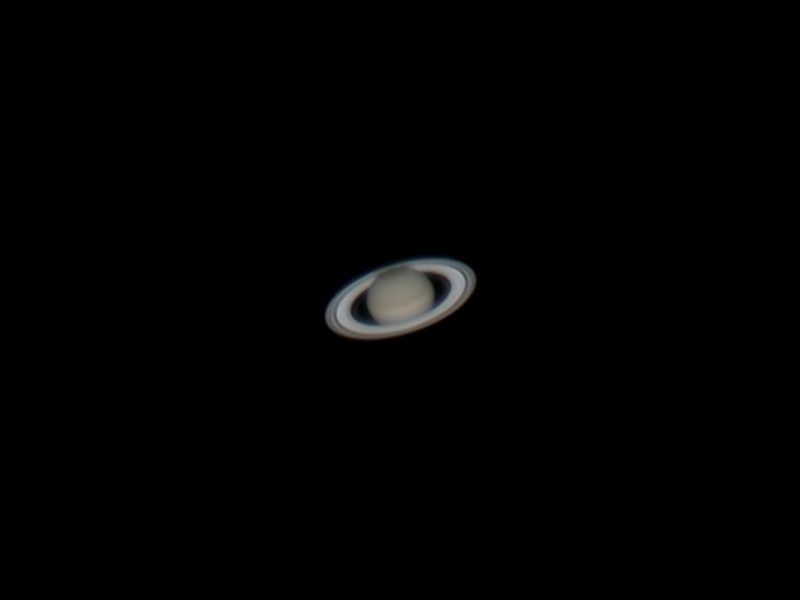
As I climbed the ladder and looked through the telescope, I was amazed! Saturn looked just like what I had seen in textbooks: a pale yellow sphere, with rings around it (albeit not in as high resolution as in textbooks); two of its moons were also visible as dots of lights around it! 

It was a surreal experience: being able to see with my own eyes a planet, millions of miles away, really puts into perspective how vast our universe is and gives me a greater appreciation for earlier astronomers, who, using telescopes less refined than the ones we have today, were able to make discoveries about the universe that we are situated in.

Next Fall, Mars will be in view, and I know that I will be among one of the first in line to see it. 

Star Gazing at Fuertes

This was the first time I ever went to an observatory. It’s so gratifying seeing the beautiful stars shimmering in the night sky and really reminds me of the things you can do at Cornell. I was able to see the constellations, and I even got to see Saturn, its ring, and two of its moons through the telescope at Fuertes! It’s amazing how the telescope, which was invented in the 1600s, allows us to visualize so deep into space. I have always been fascinated by space and planets, but it was truly an experience being able to see a “live” planet instead of just a photo from google.

I am also very appreciative of this Rose Scholar’s event because it gave me time to relax and just breathe the cold, crisp air nestling in the sky. During this week, I was flooded with exams and assignments, and I didn’t have time to slow down and enjoy the beautiful campus around me. This event definitely gave me time to stand still for a moment and appreciate where I am.

Cornell Observatory Center

Last Friday, I visited Cornell Observatory Center for the stargazing activity. It was my first time visiting the observatory and this night has been one of the best times at Cornell for me. I was concerned that it might be too cloudy to observe the stars, but I was able to see Saturn, Neptune, and even a shooting star. I have never seen a shooting star in the past and observing one without any plan was amazing. I felt like everything will be going well after seeing this shooting star. I am grateful that I had a chance to visit the observatory last Friday. This stargazing event was a great way of bonding with friends learning more about different resources that Cornell can provide to students. I hope that more students learn about the observatory and have opportunities to observe. I am planning to revisit next semester and next fall to see different stars and planets.

Starry Eyes

I haven’t been to a planetarium in years, so I was interested in visiting Cornell’s when I saw this event was offered. While it was a smaller scale than a typical planetarium, there was a large telescope indoors and another outdoors. Unfortunately, the outdoors telescope didn’t work when I was visiting, but we were able to see Saturn through the indoors telescope. Saturn is my favorite planet, and we could even see two of its biggest moons. Luckily, it was a clear night so tons of stars were visible. The weather wasn’t too bad either, so even just standing on the observation deck and watching the stars, trying to point out Polaris and constellations, was fun. It’s nice that Cornell’s planetarium is open to the public every Friday because a lot of planetariums cost money. This way students and members of the public can enjoy and cultivate an interest in astronomy for free.

Brighter Than The Stars

  Star gazing at the dome, could honestly be one of my most gratifying moments at Cornell thus far.  I was not only able to visualize and understand the interconnectivity of constellations and planets within space, but I was able to share that experience with both members of the Rose Scholar programs and locals. Though viewing Saturn from a gigantic telescope was cool , I was more fascinated by the amount of knowledge our tour guides had within the field of astronomy. They exuded such enthusiasm within their responses to our many questions, and encouraged us to think about innovations within astronomical science and their effects on future generations. What was also incredibly interesting was the level of accuracy within the telescope’s rotation and its ability to move with the rise and set of Saturn. Despite being incredibly disappointed in finding out that I was no longer considered a Capricorn, according to updated zodiac constellations, star gazing at the dome helped me cultivate new friendships and develop a  deeper appreciation for a field of study outside of my major.

The Telescope

Friday night’s Rose Scholar’s event was more than just a trip to the observatory….it was a trip to another planet! Seeing Saturn and its rings was spectacular.

I find it truly amazing how the telescope, 100 years old, is able to magnify light from a planet so far away that it takes over an hour to reach Earth. The moving parts of the telescope keep it functioning, and it has to be wound up every hour. Like a microscope for the sky, the telescope allows us to see space objects with incredible detail, and magnification is only limited by resolution.

The telescope is one of the few instruments that allows us to look back in time. In fact, the entire sky is like a look back in time, since it takes so long for light from planets and stars to reach Earth. In a sense, the night sky allows us to see the past. However, the sky also represents the possibilities that lie ahead. Looking at the sky, I always feel inspired by how we are on just one of many planets, in one solar system out of the many of the universe.

The telescope is a special instrument – one that allows us to look backwards while imagining the future.

Starry Night

As an Earth and Atmospheric Science major, I was so excited to participate in the stargazing event on Friday, and I’m very glad I did! Especially being that I grew up in a suburban town with little opportunity to observe nature, I really appreciated seeing Saturn through the telescope, as I think that our solar system and the surrounding universe is so interesting and full of intriguing unknowns. It was also gratifying to see the iconic rings around the planet through the telescope. Furthermore, we then ventured outside of the observatory and watched the stars in the sky, which was such a peaceful and unifying experience. The main reason I decided to pursue a major in Earth Science is to attain the sense of connection with nature and others around me as I did while stargazing. There is something so special about appreciating the world we all live in that makes humanity feel so cohesive and unified, and I am so thankful that our house offered this activity!

Starry night

Me and my friend went to the Fuertes Observatory for the stargazing activity Friday night. It was a gorgeous night, with a clear sky spangled with numerous stars. However, we could observe nothing on the way to the Observatory either due to the dust or lights.

After arriving, we filled into a small dark room through a narrow staircase to have a view of the Saturn using the telescope with our own eyes. This was the first time for me to observe stars through a telescope and it was super clear cause I saw the ring of the Saturn and two moons nearby.

After that, my friend and I went to the balcony outside,  which reminded me of the Arctic and the Aurora for no reason.The mysterious stars could always induce fantastic reveries and trigger people’s curiosity about the secrets of their ascent. The starry sky above us is priceless heritage not only for astronomers but for all humans.

We enjoyed the dark sky, twinkling stars and everything seemed quiescent, healing and eternal, sunk in silken silence

Above and Beyond

Friday night, my friends and I went on a trip to the Fuertes Observatory. I’ve never been to an observatory before, so I wasn’t sure what to expect when climbing up the stairs to the dome. It was dark inside and didn’t notice the big telescope at first. Fortunately, I saw many people taking turns to look through it. When it was my turn, I got to see Saturn and its rings. It was really grainy to the point where I thought it was just a picture. However, everyone there reassured me that I was actually seeing Saturn. We were also gifted in seeing a meteorite that night, which was awesome because I’ve never seen one before.

The ambiance at the observatory was relaxing and quiet, which was great to experience in the slightly cold weather. People would just quietly chat while staring up in the sky. This ambiance was what I needed to relieve some of the stress this week. It was raining earlier in the week, thus I wasn’t expecting to see so many stars above. Last year, I would often look up at the sky to see the stars, but, to my surprise, there were a lot more than what I usually see when I went to the observatory. It was truly beautiful and out of this world.

The Whole Universe Before Our Eyes

Compared to the clean lines and red brick of the other North Campus buildings, the white exterior of the Fuertes Observatory looked ancient.  Regardless, walking up the dirt path to the entrance under the cover of night, I felt anxious to step inside.  I was eager to escape the frigid air, see the one-hundred-year-old telescope for the first time, and zoom in two hundred times to glimpse celestial bodies over one billion miles away.  Although this was not the first observatory I have ever visited in my life, it was the first opportunity I had to use such a large and powerful telescope; as a result, I was the most excited for (and slightly apprehensive about) the climb up the steep, narrow wooden ladder leading to the instrument.  Saturn appeared a lot smaller in the lens than I had originally expected!  I was also surprised by the clarity and brightness of the image since it was already quite dark outside.  Overall, I enjoyed the experience very much because it was very educational and brought to life Saturn’s vivid colours and impressive ring system, when I had only previously seen it as a tiny speck in the vast sky.  Most importantly, Friday’s outing was a much-needed break from the stress of classwork and exams.  There was something strangely calming and uniquely relaxing about isolating oneself in a place without light, save for the shimmer of the planets and stars above.  Especially with the extreme light pollution in society today, the stargazing excursion yesterday represented a necessary return to the past and embrace of nature in its purest, most beautiful form.  This is a memory that will stay with me forever.

Seeing Stars (and Saturn)

Yesterday, we went to Fuertes Observatory to do some stargazing. Although it was quite cloudy during the day, the sky was clearer expected, so we could actually see lots of stars when standing on the balcony area. I thought it was really nice because it is usually really difficult to see stars at night back home due to light pollution. We had some fun trying to guess constellations and perhaps made a few up along the way. After spending some time on the porch (my neck was quite sore from looking up for so long!) we went inside and got to take a look through the main telescope. We were able to see Saturn through the main telescope, which was pretty cool. I expected it to be blurry, but I could actually see the rings of Saturn pretty clearly. One of the astronomy club students explained the mechanisms behind the telescope, which I thought were pretty interesting. Basically, there is a clockdrive that contains two spinning components that are connected to weights, which are gradually lowered over time. This keeps the telescope calibrated with the rotation of the earth, and lets us view the same object for a long period of time. The mechanism is powered by a hand-crank, which as to be re-calibrated every 90 minutes. I was also surprised to learn that the telescope is 102 years old, and that it is still in great working condition. This was a pretty cool experience and a nice break from academics.

A Billion Miles — One Telescope Away

Imagine hopping on the ultimate transportation vehicle — a space shuttle capable of carrying you at the speed of light. Everything zooms by you like a singular blur and the farthest place on earth is reachable at the blink of an eye. But traveling to Saturn would still take approximately one and a half hour. What if I tell you you can see Saturn — and its stunning ring and orbiting moons — right in front of your eyes without leaving Cornell? A telescope at Fuertes would be all you need.

Fuertes Observatory boasts a 12-inch refracting telescope that can easily magnify objects in the sky by 200 times. And more zooming can be achieved with a narrower lens at the cost of dimmer imaging. Perhaps the coolest part of this telescope is a spinning device located in the supporting structure. It is used for automatically rotating the telescope to match the rotation of the earth so that the telescope will always be aimed at the object of interest. From the telescope, Saturn looks like this: (this picture is from the internet, not the actual one I saw)

Image result for saturn from telescope

Now it’s time for some cool facts. Number 1, Saturn is massive! Both its volume and mass are 700 times of the earth’s! Number 2, Saturn’s ring is super thin! Believe it or not, it’s only 10 meters (32 feet) thick, meaning that you won’t even see the ring if you’re standing on one of Saturn’s moons! Number 3, Saturn’s ring is actually “dead” moons! Well, figuratively. When a moon gets too close to Saturn, it gets broken apart by Saturn’s gravity, becoming a part of the ring. Number 4, Mars might have a ring in the future! Mars might get a ring with its gravity just like its much-larger brother Saturn. But unfortunately, that would take 50 million years — nope, definitely not on my lifetime bucket list.

Seeing Saturn for the First Time at the Cornell Observatory

This week I had the great opportunity of visiting the Fuertes Observatory here at Cornell.

I was anticipating some cloud coverage over the stars, but luckily we were there during a window of time when the sky was very clear. Once at the observatory, we went up a narrow staircase to reach a dark room where there was an impressive telescope. It was so big that everyone had to climb eight steps or so just to look through it . Through the telescope I got to see Saturn for the first time. I have seen colored and much more detailed images of Saturn before, but seeing the evidence with my own eyes through only a lens was so much cooler.

The image was slightly blurred, probably because I was squinting, but I could make out a white glow with a bright ring around it. It was actually pretty cute!

I also learned a lot from some of the Astronomy club members who were there. Right next to the telescope room is a balcony the provides a nice view of the stars. I now know where the North Star, Polaris, is! There were many more constellations with interesting mythological names. I am thoroughly impressed in these club members who have memorized stars in large swaths of the night sky.

I would definitely visit again if a nice opportunity arises. I am also convinced that I saw a shooting star while on the balcony, but only in the corner of my peripheral vision — so if I am lucky enough, maybe I can get a better view of one next time!