
Network Applications on Wikipedia
As I was researching what to write this blog post about, scrolling through various network, graph, and game theory links on Wikipedia, I had a realization about what I was doing. I was browsing a vast online information system, connected by hyperlinks of related content. I was interested in learning more about what this network reveals about the world and the interconnectedness of communities through technology. After I started reading more about this topic, I came across two papers. The first was written by Jeremy Neiman, explaining what Wikipedia’s network structure discloses about the modern day intercultural exchange of information, and the second by Robert George, detailing experimentation with triadic closure on the Wikipedia platform.
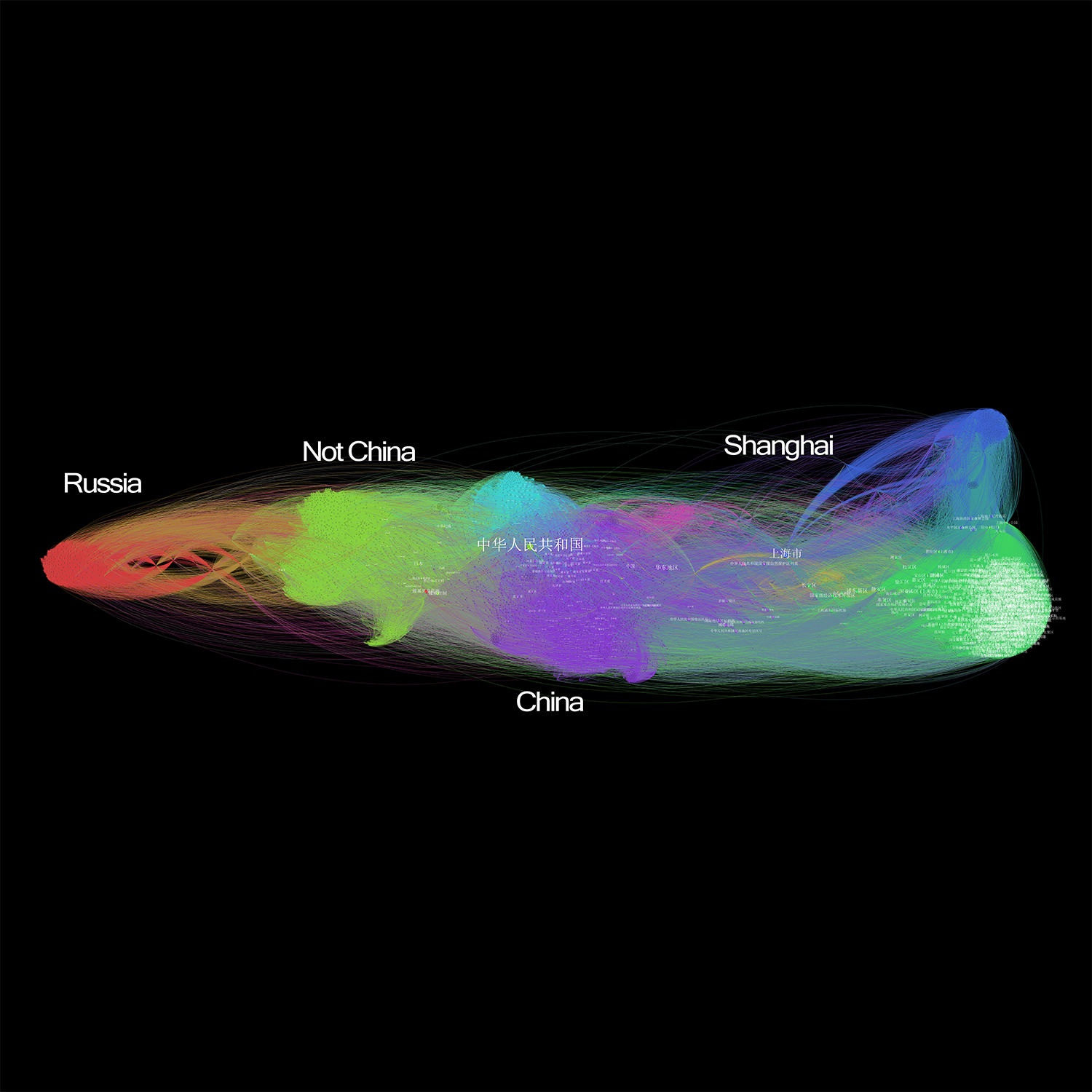
As a short summary of Neiman’s procedure, his team created visual networks based in 5 cities, Shanghai, New York City, Tokyo, Moscow, and Istanbul with similar Wikipedia sizes, drawing from the estimated 275 million hyperlinks on the platform in total. They then determined the importance and interconnectedness of each topic based on how many similarities there were between related pages. This can be thought of as a directed graph, where many of the edges between nodes are actually 2-headed arrows, since two highly related subjects likely have links explaining one another.
Neiman was specifically interested in how specific locations were viewing information from the other 4 cities. I thought China’s was most interesting, reflecting how this country views the free spread of information. While their internal data was highly linked, potentially topics such as Chinese history, it was clear that information from other countries was less sought-out or accessible.
After reading Neiman’s article, I was interested in if our in-class concept of triadic closure was something that educators had attempted to apply to Wikipedia. Robert George compared different procedures in which he predicted which links would be likely to form given triadic closure. By attempting different weights, the research team had an algorithm which predicted the topics that a particular page would route to, and then compared this with the actual links on the site. His conclusion was that while triadic closure was relevant in the earlier days of Wikipedia, the influx of less active editors has slowed down the pace. This means choosing between more correct and incorrect predictions or less of each.
Both these papers were very informative in studying a real world application of directed graphs and triadic closure, and how it is not necessarily an end all be all concept.
https://www.cs.rpi.edu/~magdon/courses/casp/projects/George.pdf