Relief farming

North Country dairy farms of a generation ago, when they were mostly operating with under a hundred cows, used to have access to what were called “relief milkers”. Many farm families were both practically and culturally bound to their herd’s incessant demands so that vacations were rare. Still, I used to hear old farmers tell me how (paraphrasing), “ We had a relief milker once when we had to take our daughter to the hospital in Syracuse”.

The relief milker was either a member of the dwindling group of hired hands, or a former farmer who had sold their herd when economic forces pinched too hard. They were now working other jobs but with the relief gigs, were able to hold onto a profession they loved and be valued for their extremely special skill set by doing chores for crisis stricken, or Myrtle Beach-bound, neighbors. It’s important to realize that this relationship existed because a critical mass of farms existed in the North Country. The number of farms and the farmers’ need to get away, matched up with the number of relief milkers who made that possible.

We run a vegetable farm in Lisbon. Vegetables need only a fraction of the dedicated attention that cows do and I, for one, have no interest in the old fashioned ways of the farmer who only leaves the farm for emergencies. Still, it’s not easy to get away. Though we aren’t completely alone in farming produce here, we certainly don’t have anything close to the resources and services that the dairy community does. Read more Relief farming
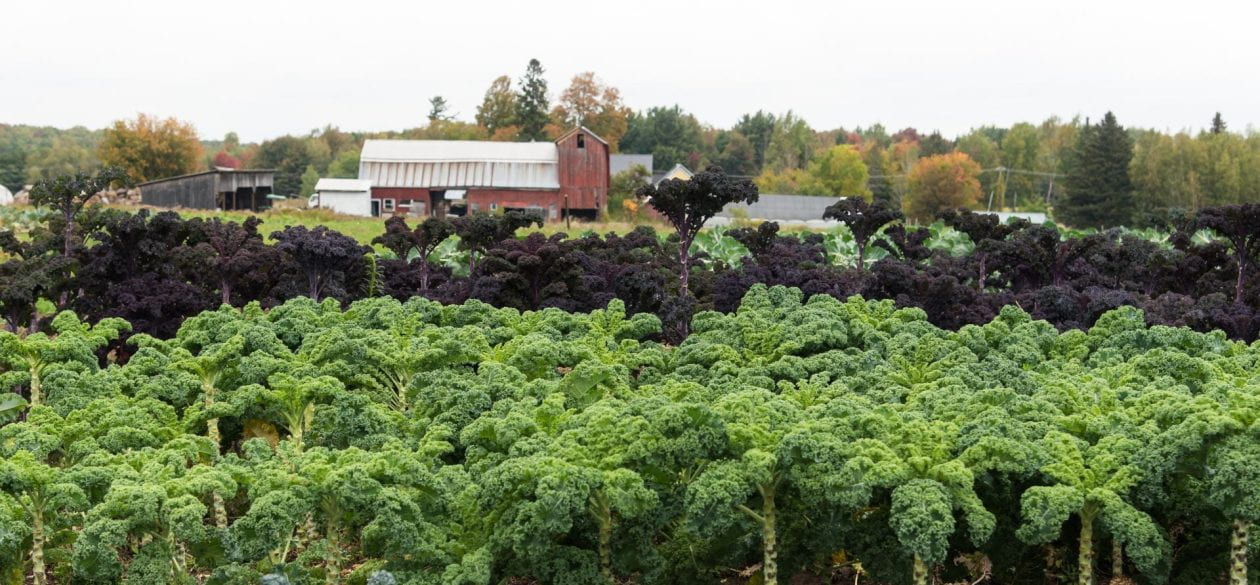
Spring Moon Colony at Kent Family Growers

The start of the growing season looms near and with a shudder I imagine the vicissitudes that our farm’s early season plants will face. In the third week of April we will have onions ready to transplant in the field, as well as the first succession of broccoli and kale. April through May in the North Country is pretty consistently a miserable time for vegetable plants. Transplants that began their life in our warm greenhouse, even after judicious hardening, go on strike when set in wind strafed fields of cold soil. Early direct seeded crops are slow to germinate and once sprouted grow reluctantly. Cold soil means low nutrient availability so organic growers often struggle to feed spring crops sufficiently. Spring here is also marked by frosts, violent winds, wild swings in temperature, cutworms, flea beetles, ravenous post-hibernation woodchucks and in several recent spring seasons, long periods with little to no rainfall.

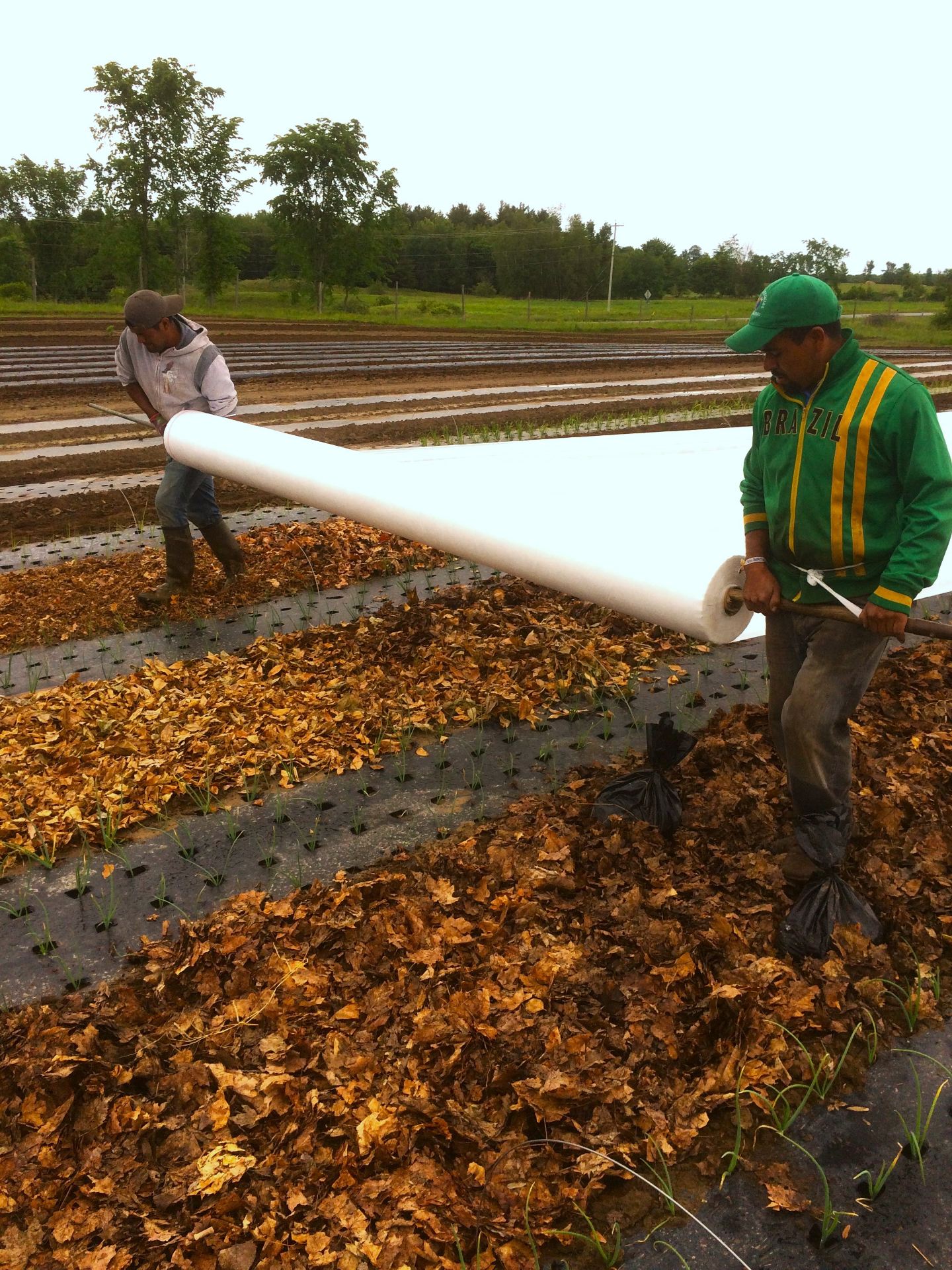
What does a gardener do? Occlude. This is the fancy term for covering or otherwise keeping your plants from direct contact with the savage realities of life outdoors. We cover acres of our early crops with row cover, a lightweight fabric that allows air, light and water to pass but not insects. Row cover warms the soil beneath and so encourages growth of your crop – as well as weeds. Even old, torn stuff works well to keep out dumb insects like cucumber beetles, but if you are trying to keep out clever pests like Leek Moth, Colorado Potato Beetle and Flea Beetle you will need undamaged covers and then carefully and completely seal the edges with soil. In my experience, woodchucks tend to leave covered crops alone.

The Farm crew at Kent Family Growers lays a wide row cover over allia.
The farm crew at Kent Family Growers lays a wide row cover over allia (onion relatives). Credit: Dan Kent

Row cover is not always helpful with wind. When laid over wire or PVC hoops it can protect your plants from moderate winds but when a serious blow arrives, the whipping and tossing covers can thrash your plants. The expensive row cover itself is at risk in high winds. More than once, we have laid out several thousands of dollars worth of row cover and within days had to haul it to the dump after being shredded in a tempest. It is always true, but especially in the spring, that a gardener should keep an eye on the weather. Another challenge of row cover is the way it hides the plants from sight. To investigate what is going on underneath you have to unfasten and lift an edge of the cover, stoop and peer in, making it harder to casually and regularly keep an eye on the crop. Read more Spring Moon Colony at Kent Family Growers