Will It Work on My Land: Solar Energy and the Future of Farming in the Mohawk Valley

(Presentation March 7th, 2020)

Will it work on my land, with a solar panel in back

New York State has passed some of the most ambitious renewable energy goals in the nation. Under former Governor Andrew Cuomo the state committed to an 85% reduction in greenhouse emissions by 2050 and to sourcing 100% of its electricity from clean sources by the year 2040. The state’s plan is to help consumers make more informed energy choices, develop new energy products and services while protecting the environment.

In order to do this companies are investing in new large scale renewable energy facilities throughout upstate New York. Herkimer county is right in the middle of one of the most desirable locations for these facilities due to its proximity to power transmission lines crossing the state.

Farmers and landowners are being solicited to lease their property by solar developers. Potentially this can create a sustained income stream for property owners to help support the land ownership costs.

Solar leases are long term commitments, usually running 20 years with another 20 renewable that will take up many acres of land. A workshop for land owners was held on March 7th, 2020 at Herkimer Community College. Sponsored by Cornell Cooperative Extension – Herkimer County, Mohawk Valley Economic Development District, Otsego County Conservation Association and the College it brought together experts in the fields of land use, economics, legal concerns and solar grazing to present the latest information for landowners considering leasing.

Person on stage and people in audience at solar workshop


Solar workshop presentations:
1. New York’s Solar Electricity Goals and Agriculture, David Kay, Cornell University

2. Siting Solar Energy Facilities, Jennifer Manierre, New York State Energy Research Development Authority

3. Municipal Planning and Solar Energy Facilities, Matilda Larson, St. Lawrence County Planning Office

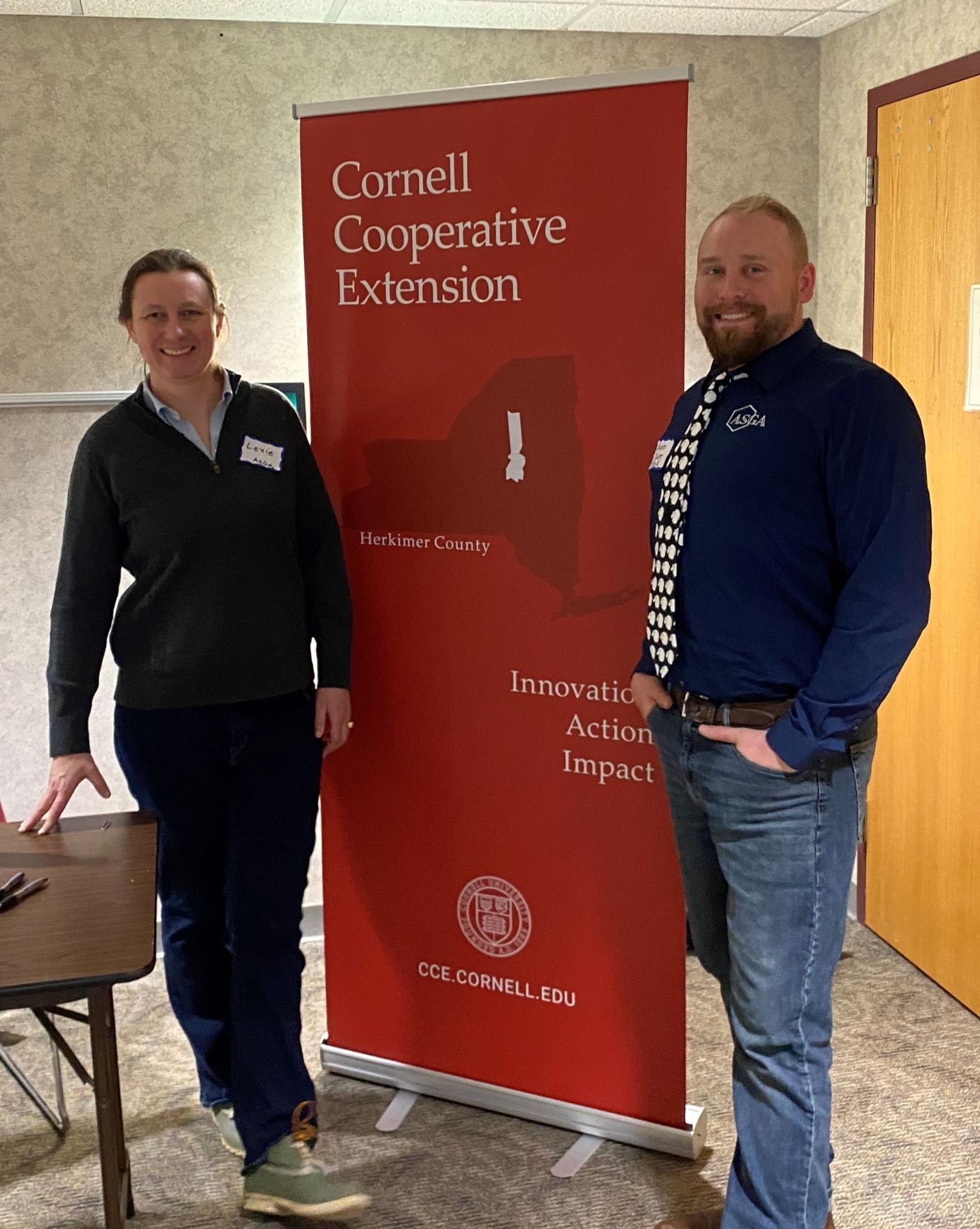
4. Co-Location of Solar Facilities and Agriculture, Lexie Hain & Caleb Scott, American Solar Grazing Association

5. Legal Consideration of Solar Leases, Kevin Overton, Harris Beach PLLC

6. Solar Development and Agricultural Laws, Jason Mulford, New York State Department of Agriculture and Markets


Solar workshop presenters standing next to banner


Here are some additional resources on solar leasing:

American Solar Grazing Association

Cornell Cooperative Extension – Sullivan County
Solar Leasing Q & A

Cornell Cooperative Extension – Capital Area Agricultural & Horticultural Program
Issues with Solar Leases

New York Farm Bureau:
Leasing Your Farmland for Wind & Solar Energy Development

New York State Energy Development Authority:
Solar Leasing Fact Sheet & Solar Guide Book

Solar Leasing in Agricultural Districts

Solar Energy Industry Association:
Land Leases for Solar

Online Gardening Resources for Self-Sufficiency

Rooted & Resilient: Homesteading Skills for Beginners Webinar Series

Rooted & Resilient: Homesteading Skills for Beginners

Recordings of each session available below.

Grow your gardening skills and cultivate success with Cornell Cooperative Extension Herkimer’s Spring Gardening Workshop Series! These engaging online workshops cover everything from soil health and regenerative gardening to self-sufficiency, pollinator-friendly practices, and maintaining a thriving garden. Learn how to plan, plant, and sustain a productive, resilient garden with expert guidance on topics like watering techniques, composting, pest prevention, and season extension. No matter your space or experience level, this series will equip you with the knowledge and confidence to grow a flourishing, sustainable garden.


Spring Gardening: Planning & Planting for Success

Video: Watch this session on YouTube
Seed Starting and Garden Planning slides

Be prepared to grow your own food by participating in this interactive session that will guide you through essential steps for a thriving vegetable garden. Learn how to prepare and evaluate your soil, select and start seeds, build a customized planting calendar, and explore various planting methods—from traditional garden plots to raised beds and container gardening. Plus, discover how to extend your growing season with row covers and cold frames. All of this referenced to our local growing conditions in Herkimer County.

Getting Started Right in Beekeeping

Video: Watch this session on YouTube
Beekeeping slides
Video: Evicting Drones at the End of Summer
Video: How to Catch a Swarm of Bees

Interested in the history and science of beekeeping? Considering making the commitment to starting your own apiary this year? This workshop introduces you to basic beekeeping and is designed for the absolute beginner with no prior knowledge. The session includes the basics of hive management, bee health, harvesting and planning your home apiary. Also discussed will be in-person and on-line resources to continue your learning about beekeeping.

Gardening for Self-Sufficiency

Video: Watch this session on YouTube
Online Gardening Resources for Self-Sufficiency
Gardening for Self-Sufficiency slides

Take control of your food supply and cultivate independence and take control of your food supply with this online workshop! Learn how to grow a productive, sustainable garden that provides fresh, nutritious food for your household year-round. This workshop covers essential techniques for maximizing yields and nutritional benefits, preserving harvests, and selecting the best crops for self-reliance—whether you’re working with a backyard plot, raised beds, or containers. Empower yourself with the skills to reduce grocery bills, eat healthier, and enjoy the satisfaction of homegrown food. Join us and start your journey toward greater self-sufficiency today!

Backyard Poultry

Video: Watch this session on YouTube
Backyard Poultry slides
Online Backyard Poultry Resources

Turn your backyard into a source of fresh eggs and sustainable living! Whether you’re a beginner or looking to expand your flock, this workshop covers everything you need to know about choosing the right breeds, setting up a coop, feeding and care, and keeping your chickens happy and healthy. Learn how to raise poultry for fresh eggs, meat, pest control, and even soil enrichment—right in your own backyard! Join us and take the first step toward a more self-sufficient and rewarding homestead.

Soil Health and Regenerative Gardening

Video: Watch this session on YouTube
Regenerative Gardening slides

Cornell Soil Health Manual (free download)
Soil Health Factsheets
General Soil Health Website
Comprehensive Assessment of Soil Health

Create a healthy, thriving soil for your crops to grow in. Learn how to build nutrient-rich, resilient soil that supports plant health, boosts yields, and restores the environment. This workshop covers essential techniques like composting, cover cropping, no-till gardening, and natural soil amendments to create a self-sustaining garden ecosystem. Whether you’re a home gardener or a small-scale farmer, you’ll gain practical knowledge to improve soil fertility, conserve resources, and grow more with less. Join us and start regenerating your garden from the ground up.

Pollinators and Climate Resilient Gardening

Video: Watch this session on YouTube
Protecting Pollinators in the Home Garden slides

We are all experiencing changing weather patterns that make planning a garden challenging. The region is also seeing a dramatic decline in pollinators that are a critical part of our garden’s growth cycle.  Create a vibrant, resilient garden that thrives in changing climates with this workshop. Learn how to attract and support essential pollinators while designing a garden that withstands extreme weather, drought, and shifting seasons. This workshop covers pollinator-friendly plant selection, water-wise gardening techniques, and strategies to build biodiversity for long-term resilience. Home growers will gain the tools to cultivate a flourishing, climate-smart garden that benefits both your harvest and the environment.

Maintaining a Thriving Garden (recording coming soon)

Keep your garden flourishing all season long by learning the best techniques for plant care, including watering efficiently, managing soil moisture, weeding and feeding your plants with natural fertilizers and compost. Discover how to prevent pests and diseases organically, maximize your harvest with succession planting, and properly harvest and store fresh produce for long-lasting enjoyment. Whether you’re growing in a backyard, raised bed, or container garden, this workshop will give you the skills to keep your plants healthy and productive.


Perspectives on the Opportunities and Impacts of Solar Installation in Agricultural Areas

In a continued collaboration between Cornell Cooperative Extension, Pennsylvania, and Farm Bureaus of Ohio, Pennsylvania and New York this series of webinars will explore the continued push for development of solar energy projects in agricultural areas of the Northeast. This five part series will address the topic from multiple perspectives and help to identify the opportunities and challenges as well as currently known best practices for integrating the need for renewable energy with other economic and social factors.

Solar panels in field solar panels with livestock grazing inbetween solar panel in field

Session #1 VideoImpacts of Large-Scale Solar on Rural Communities – A Research Perspective

Research into this topic is still relatively new; however, initial studies offer some insight into how the perceptions, impacts and opportunities around solar and land use. This session will explore current finding on key issues in rural communities, decision making metrics being developed through this research and how communities can integrate these metrics. Additionally, the potential tradeoffs between energy and agriculture and emerging opportunities in agrivoltaics will be discussed.

Local Law for Solar Project Development in Pennsylvania – Slides
Economic Impacts of Solar on Rural Communities – Slides

Session #2 Video – Solar and Agriculture – A Company’s Perspective on the Challenges and Pathways to Successful Integration of Both

Developers of large-scale solar facilities are interested in optimizing the use of the land within the project footprint and continue to work to understand the opportunities and challenges of agrivoltaics, or dual use, setups. The session will also explore the key aspects of the decision-making process developers use for site selection and how they weigh these factors against impacts on land use, particularly when the location contains soil types identified as prime for agriculture production.

Agrivoltaics – Slides
Solar and Agriculture – Slides

Moderator: Jeff Williams, NY Farm Bureau JWilliams@nyfb.org

Panelist:

Session #3 Video –  A Farmer’s Perspective on Solar

Farmers who have looked closely at solar electricity production on their land will discuss their experiences with developers, and their perceptions of the benefits and challenges of solar for agriculture.  Discussion will include differences in the scale of solar projects, how solar might impact farmers in varied circumstances, and ideas for optimizing the benefits of a nd mitigating the challenges of solar for agriculture.

A Community Perspective on Solar in New York State – Slides

Speakers:

Moderator: David Kay

Session #4 Video – A Community Perspective on Solar

Expanding out beyond the impacts to individual landowners, solar develop can have broader opportunities and challenges for the rural, agricultural based communities that host them. This session will offer observations and ideas for the community level on best practices for successfully integrating solar as a land use. When it is a competing land use and when it can be a complementary land use.

Speakers:

  • Katie Malinowski is the Executive Director for the Tug Hill Commission, beginning her career there in 1998 as a natural resources specialist. She leads the state agency’s work with local governments and other partners in planning, natural resources, and community development. She received her MS in Environmental Science – Water Resources from the School of Public and Environmental Affairs, Indiana University, Bloomington, IN.  Her undergraduate studies were completed at SUNY Binghamton with a BA in Environmental Studies.
  • Matt Johnson is the Planning Director for the Tug Hill Commission and has over 25 years’ experience working with small rural communities in the Tug Hill region on a wide variety of planning and land use issues. Matt assists communities with comprehensive plans, zoning laws, subdivision laws, and GIS projects. He received his Bachelor’s Degree from Syracuse University in 1993 and a Master’s Degree from Boston Architectural College in 2018. He is a member of the American Institute of Certified Planners.
  • Matthew Smith is a Planner at the NYS Tug Hill Commission using his technical knowledge to help local governments through the comprehensive plan, zoning code and subdivision law update processes. He has a Bachelor’s Degree in Political Science with a minor in History from Siena College. Matthew has completed an update to the “Planning for Offsite Solar” technical paper for the commission, has given a presentation on the progress and scale of solar buildout for local farmers interested in solar sheep grazing, and has recently completed a regional soils map intended to be a tool for local officials to protect their natural assets and better site incoming solar facilities.

Moderator: Lily Guthrie

Session #5 Video – Question and Answer

A Q&A to cover any and all of the previously presented material in Sessions 1-4 featuring the speakers from this series.

Testing workshop payment

Please don’t click on this to pay, as we’re just testing! Thanks!