


Anthracnose is most common on black raspberry, red raspberry and occasionally blackberry. Symptoms of this fungal disease (Elsinoe veneta) are most obvious on canes but may also occur on leaves and fruit.
Anthracnose cane blight
Anthracnose is most common on black raspberry, red raspberry and occasionally blackberry. Symptoms of this fungal disease (Elsinoe veneta) are most obvious on canes but may also occur on leaves and fruit. The most common canker diseases of raspberry are described at this webpage.
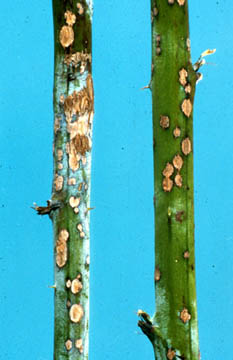
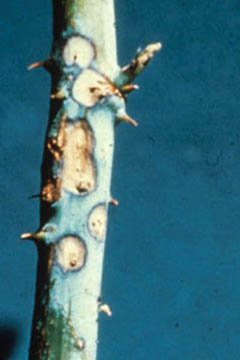
Symptoms of anthracnose on raspberry canes begin as reddish purple round spots (lesions).
These later become sunken buff to ash gray spots with dark margins.
More information:
- Anthracnose of Raspberry and Blackberry– (Ohio State)
- Raspberry Anthracnose – (Purdue)
Anthracnose Leaf Spot
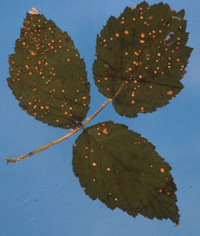
Leaf spots occur most commonly on the lower portion of canes where conditions are favorable for disease development.
Anthracnose leaf spots are more angular in shape, smaller, and occur earlier in the season than those of Raspberry Leaf Spot.
More information:
- Anthracnose of Raspberry and Blackberry– (Ohio State)
- Raspberry Anthracnose – (Purdue)
Use these resources if you need additional help with diagnosis and to find solutions to your problem.