
Amie Patchen

Despite clear benefits to children’s physical and mental health, focus, academic success, and encouraging sustainability behaviors, integrating consistent outdoor time into school activities can be challenging. In a research project following 17 teachers from upstate New York, a Cornell team explored if and how teachers were able to use the green space in their elementary schoolyard, generating results that could help provide children with consistent access to natural spaces. The work, supported by the Cornell Atkinson Center for Sustainability, the Cornell Einhorn Center for Community Engagement, and the Cornell Master of Public Health program, was published on Dec 3 in the journal Frontiers in Public Health…

Despite the danger and death toll of heat-related disasters in the U.S., the Federal Emergency Management Agency (FEMA) has never declared a heat wave an emergency. The reason is twofold: a lack of real-time data on the impacts of extreme heat, and a lack of clarity on how to mitigate those impacts. “When extreme heat events happen, they are acute emergency disasters,” says Dr. Amie Patchen, Lecturer and Chief of the Environment, Climate & Health Concentration for Cornell Public Health. “These disasters cause at least hundreds of deaths each year,” adds Dr. Alistair Hayden, Assistant Professor of Practice. “More deaths annually than hurricanes, tornadoes, and floods combined…

A simple but powerful intervention asks students to color-code their written text to indicate how claims are supported with evidence. Each claim is assigned a color and students use the same color to mark the corresponding evidence; for example, a student could highlight a claim about increasing mosquito populations in a blue color, and then also mark the supporting evidence about mosquitos in blue. This strategy limits the potential use of generative AI in student writing while reinforcing learning objectives. It also provides a new way for students to visualize and map out the argumentation and organization of a piece of academic writing. Surprisingly, it led to a range of unanticipated benefits for students and faculty alike, such as…
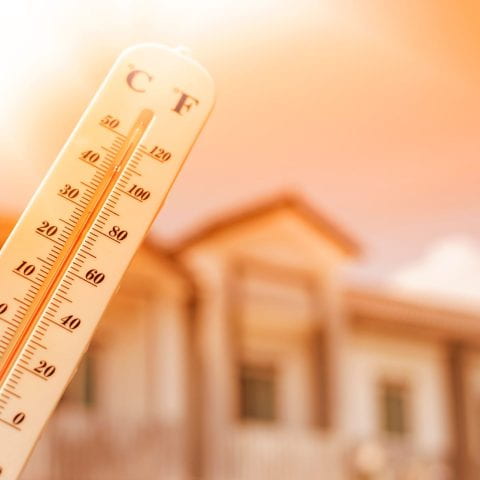
In 2023, the Federation of American Scientists engaged 85+ experts in conversations around federal policies needed to address extreme heat, yielding over 100 recommendations to address extreme heat’s impacts and build community resilience. These recommendations represent the building blocks of a whole-of-government strategy on extreme heat, spanning six distinct topic areas: infrastructure and the built environment, workforce safety and development, public health, medical preparedness, and health security, food security and multi-hazard resilience, planning and response, and data and indices. Cornell Public Health’s Alistair Hayden and Amie Patchen helped author three policy memos…
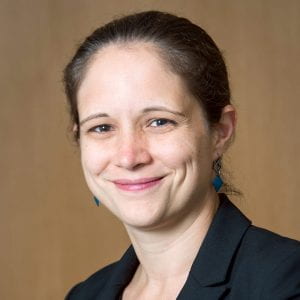
Five faculty members have been honored with the 2024 Teaching Innovation Award, sponsored by the Vice Provost for Academic Innovation and the Center for Teaching Innovation. This year’s theme, “Creative Responses to Generative Artificial Intelligence,” recognizes creative approaches from the last year developed in response to generative AI. Award winners will present their experiences at the Provost’s Teaching Innovation Showcase: Creative Responses to Generative AI, on April 11. The winners will collaborate with CTI to share their experiences with colleagues. “The award winners, and other applicants as well, represent a wide and impressive range of responses to the new challenges and opportunities associated with…
Dr. Amie Patchen has been teaching for over 16 years. After receiving her PhD in Curriculum and Instruction from Boston College, she joined the Cornell MPH Program as a postdoctoral associate, where she currently teaches One Health and Public Health Foundations I for our first-year students, and the Integrated Learning Experience course for second-year students. Before becoming interested in public health, she was a high school science teacher. “My students faced challenges from outside of school that impacted their opportunities to participate in school. Through trying to address those challenges, I had opportunities to work on multiple projects that connected science learning with sustainability and social…