


Like any group, DEI practitioners use jargon as a shortcut to convey specific meanings that may be unclear or confusing to anyone unfamiliar with the terms. As part of our DEI Bulletin series, we are exploring some key terms used to describe important DEI concepts. If there’s a term you’d like us to explore, contact Anna Katharine or Amara, or you can submit a suggestion anonymously.
The acronym DEI has become fairly common in American society. We’ve already used it three times in this bulletin, not counting the title! When a phrase becomes routine, we might stop thinking about what it means. Or, more frequently, we forget that everyone is not as familiar with it as we are, and our meaning may be unclear.
What does DEI stand for?
The acronym DEI stands for diversity, equity, and inclusion. You may also have encountered related acronyms:
- DEIJ – Diversity, equity, inclusion, justice; sometimes reordered to spell JEDI
- DEIB – Diversity, equity, inclusion, belonging
What does DEI mean?
DEI is often used to describe a collection of ideas or values. For example, you might have attended an event described as a “DEI workshop”, or been asked to write or review a “DEI statement”. This collection of ideas or values can be grouped into three areas.
Diversity. Human beings are different from each other. We each hold many identities – some visible, some not – and these identities influence the ways we perceive and experience the world. My experience of the world is no better or worse, normal or unusual than yours. They are different, and there is beauty and collective strength in that difference. Many of us who work at AgriTech see first-hand in our research and extension that the world around us is full of healthy diversity. Diversity is often erroneously simplified to just racial or ethnic differences, but it covers all areas of states and experience.
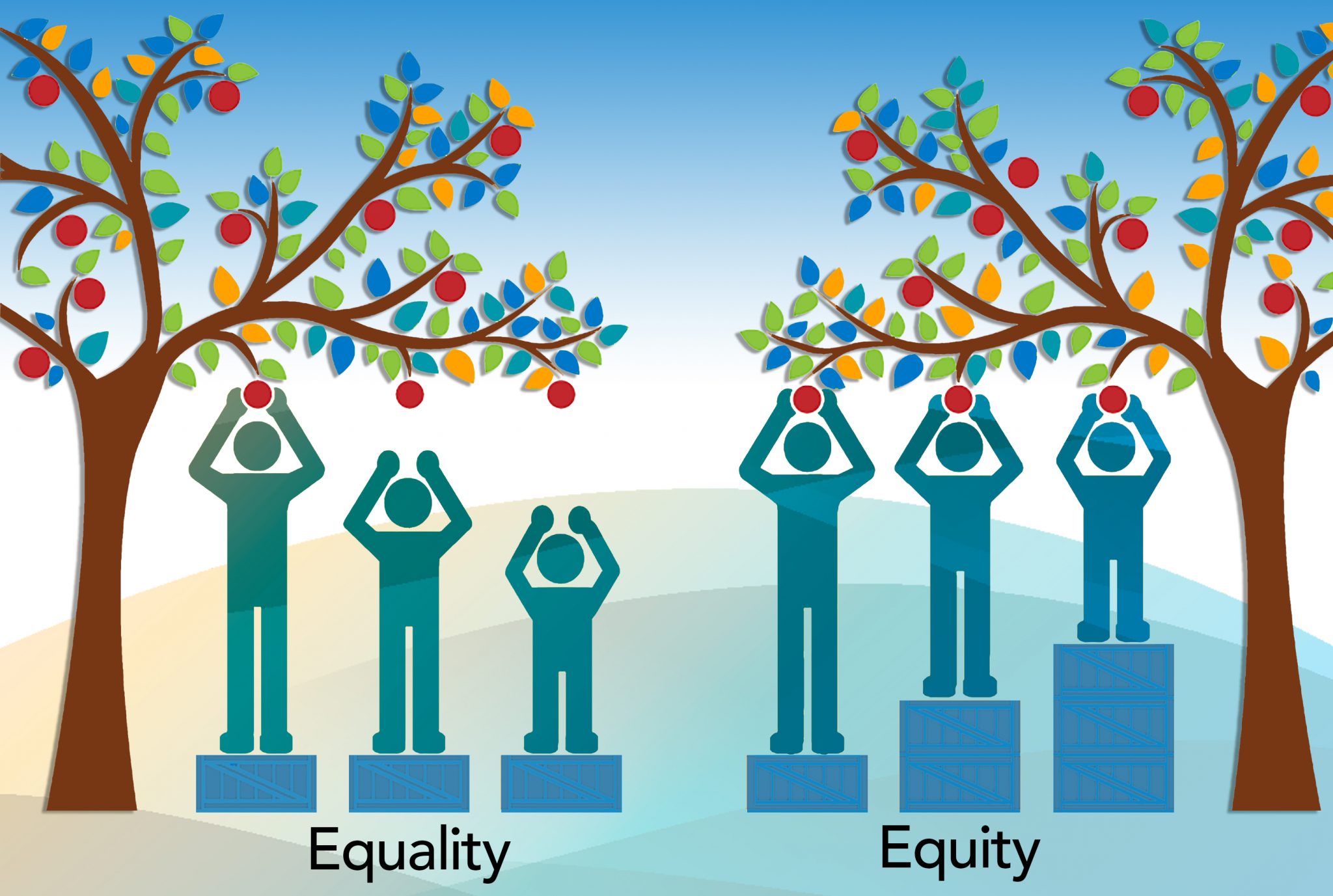
Equity. Equity is about actions; how we treat each other. Equity means supporting everyone’s ability to thrive, while recognizing that what each of us needs to thrive is different. You may have seen some version of this image describing the difference between equality and equity. (There are also compelling reasons to move beyond this comparison.) If you have mentored a student or postdoctoral researcher, or trained or supervised an employee, you likely know that supporting each person looks different depending on who they are, their past experiences, and their current needs.
Inclusion. Inclusion is intentionally creating a welcoming culture, atmosphere, or environment through the way we treat each other. At AgriTech, we are at our best when diverse individuals work together effectively, and everyone feels valued and engaged. The feeling of a friendly, mutually supportive community is frequently mentioned as something people love about AgriTech, and might describe the next step beyond inclusion: belonging. A big component of inclusion is being mindful of diversity. Not every colleague or audience member learns in the same way you do, observes the same religious holidays, or has the same physical (dis)abilities you do. Inclusion means celebrating and planning for these differences.
At Cornell AgriTech, we often talk about diversity, equity, and inclusion in the context of accessibility. Practicing equity and creating inclusive environments in our labs, fields, offices, work teams, and units makes AgriTech a place where people with diverse identities – all of us – can achieve our full potential. When we design and conduct equitable research and deliberately create inclusive learning environments, we ensure that the world-class knowledge generated at AgriTech is accessible to all of our audiences.
Some ways you can put DEI into practice at Cornell AgriTech
- If you haven’t already, spend some time reflecting on your own identities. There are a variety of social identity wheels (and accompanying activities) available online, including this one from the University of Michigan. Reflecting on our own identities can help us understand our own needs and cultivate empathy for the diverse identities of others. You might also seek out support and community with those who share one or more of your identities. At Cornell AgriTech, there is an affinity group for minority genders in STEM (MinGenSTEM) and allies. Cornell also offers Colleague Network Groups around a few different identities. Neurodiversity @ Cornell hosts groups and events especially for people who identify as neurodivergent.
- In the lab and field we write protocols for how to use pieces of equipment or conduct experiments. They help remind us of what to do. Having written protocols around things like planning extension events, hiring, and welcoming new people into our labs and units can give us that extra “nudge” to help our actions align with our values. For some ideas, check out previous DEI bulletins on Lab Manuals as Accessibility Tools and Inclusivity in Extension Programming.
- Think back to the last time you started a new job or visited a new place. What would have helped you feel included? For example, clear instructions and signage for events help new visitors find the location and understand what to do when they arrive, making them feel confident of their welcome. Including information on entrance routes without stairs means that attendees with limited mobility don’t need to ask how, or wonder if, they’ll be able to get into a building. When scheduling events, consider things like major religious or school holidays that affect possible attendees. Cornell offers information on accommodations for students and employees around religious holidays and observances.
If you have a favorite way you put DEI into practice at Cornell AgriTech, we’d love to hear about it!
At AgriTech we grow things, including accessibility within our community and for all our audiences.
Sincerely,
Anna Katharine Mansfield and Amara Dunn-Silver
AgriTech DEI Council co-chairs